

A medicine’s suitability or dose can depend partly on your genes. Drug response genetic testing identifies variants that may affect how you respond to particular medicines. In the UK, testing is used on a relatively routine basis for five drug-gene pairs. Results can inform treatment, but they do not diagnose a health condition or replace clinical judgement.
It’s understandable to want a clearer picture of why a medicine works differently from person to person. This guide explains what pharmacogenetic testing can reveal, which medicines may be covered, and how a sample is analysed. It also explores MT-RNR1 variants, which can increase the risk of hearing loss with certain aminoglycoside antibiotics, helping you understand where genetic insight may support more informed conversations about care.
Key Takeaways
- Pharmacogenetic results can help explain how someone may respond to certain medicines, but they don’t diagnose a health condition.
- Reports cover selected drug-gene pairs, not every medicine; the genes tested determine which medication insights are included.
- Blood, saliva or cheek-cell samples can provide genetic material for laboratory analysis.
- MT-RNR1 variants can raise the risk of hearing loss associated with aminoglycoside antibiotics such as gentamicin.
- Learn how genetic findings are interpreted alongside other clinical factors before they inform medication decisions.
What is pharmacogenetic testing?
Pharmacogenetic testing examines inherited genetic differences that can affect how a person responds to particular medicines. Unlike diagnostic genetic testing, which looks for genetic changes linked to a health condition, it focuses on medication choice, likely response and dose. It can add genetic information to prescribing decisions, alongside symptoms, medical history and other medicines.
That distinction matters. A diagnostic test may help identify or rule out a condition, but drug response genetic testing does neither. Instead, it looks for variants in genes involved in how the body processes or responds to specific medicines. Most people inherit two copies of each gene, one from each parent, and variants can affect how those genes function.
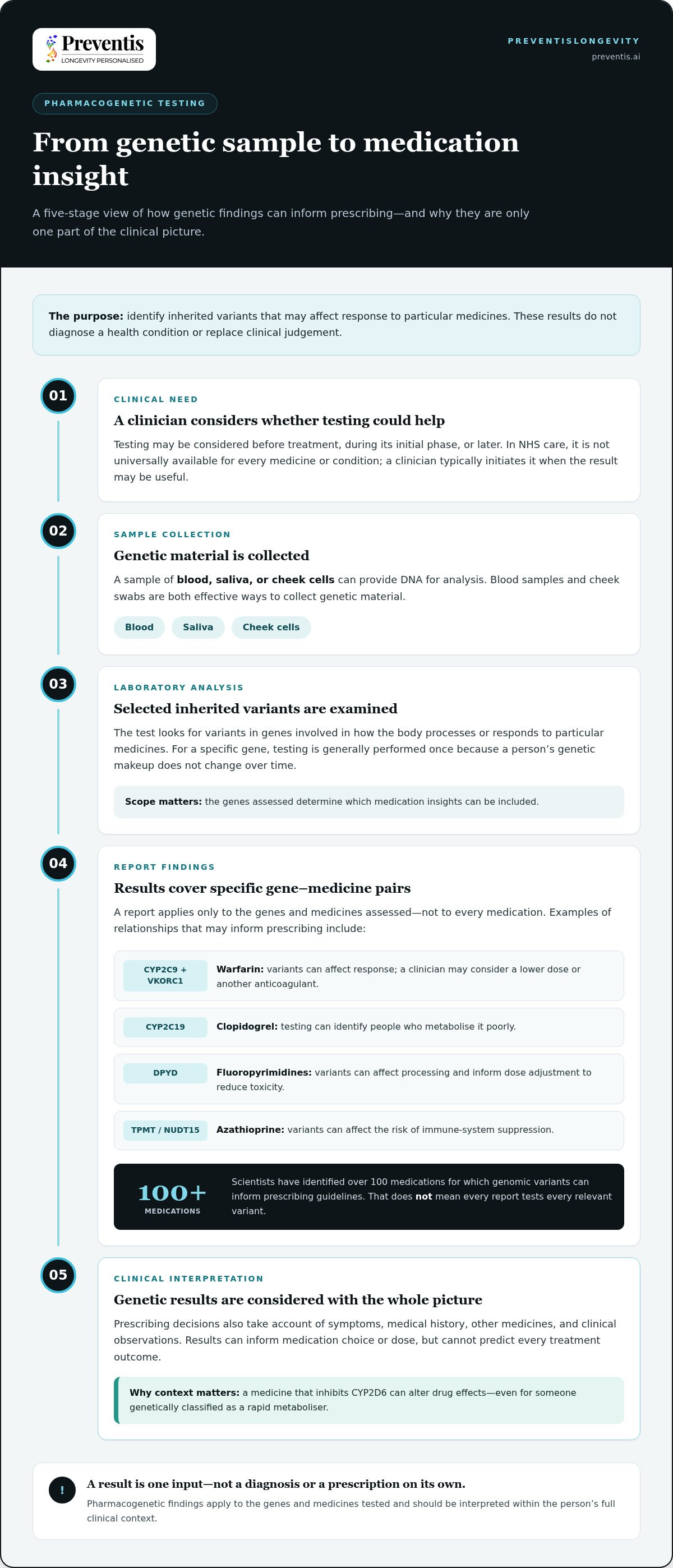
The result may help explain why a standard dose could be unsuitable for a particular patient. For example, CYP2C9 and VKORC1 variants can affect warfarin response, so clinicians may consider a lower dose or another anticoagulant. DPYD variants can affect the body’s processing of fluoropyrimidine chemotherapy, informing dose adjustment to reduce toxicity. Genetics is one input: other medicines, health conditions and clinical observations also shape a prescribing decision.
Examples span several areas of healthcare. In the UK, TPMT testing has an established role in treatment involving leukaemia and inflammatory bowel disease. TPMT and NUDT15 variants can affect the risk of immune-system suppression with azathioprine. CYP2C19 testing can identify people who metabolise clopidogrel poorly, which may matter after coronary stent insertion. NICE recommends pharmacogenomic testing before clopidogrel is prescribed.
Pharmacogenetic testing can also inform mental health treatment. The NHS may use it for psychiatric medicines, particularly when a patient has not responded well to standard treatments for depression or other conditions. NHS testing is not universally available for every medicine or condition. A clinician typically initiates it when they consider the result clinically useful, before treatment, during its initial phase or later.
For a specific gene, testing is generally performed once because a person’s genetic makeup doesn’t change over time. However, the result applies only to the genes and medicines assessed, and it cannot predict every treatment outcome. A medicine that inhibits CYP2D6, for instance, can alter drug effects even for someone genetically classified as a rapid metaboliser. Results therefore need interpretation within the patient’s full clinical context.
Are all medications covered by the report?
No. A pharmacogenomic report covers selected gene-medicine relationships, so its findings apply only to the genes and drugs assessed. Scientists have identified over 100 medications for which genomic variants can inform prescribing guidelines, but that doesn’t mean every report tests every relevant variant. The panel’s scope determines which medication effects and possible adverse reactions it can address.
Examples show how genetic differences can influence specific treatments:
- Statins: An SLCO1B1 variant can increase the likelihood of muscle pain and weakness with some statins, including atorvastatin and fluvastatin.
- Antidepressants: CYP2D6 or CYP2C19 variants can affect the breakdown of medicines such as sertraline and venlafaxine. CYP2D6 is involved in metabolising about 20% of commonly prescribed medications.
- Azathioprine and mercaptopurine: TPMT or NUDT15 variants can raise the risk of immune-system suppression with azathioprine. A TPMT variant can also make typical mercaptopurine doses used for acute lymphoblastic leukaemia cause severe side effects.
- Irinotecan: A UGT1A1 variant can increase the risk of severe diarrhoea and infection during treatment for colon cancer.
Other examples include HLA-B variants associated with severe skin reactions to abacavir, and CYP2B6 variants that can affect the nervous system during efavirenz treatment. For fluoropyrimidines, including 5-fluorouracil, impaired metabolism can contribute to serious toxicity. About one-fifth of patients receiving these medicines experience severe adverse drug reactions.
Genetic information can also support prescribing for warfarin and clopidogrel. CYP2C9 and VKORC1 variants may affect warfarin response, while CYP2C19 testing can identify poor clopidogrel metabolisers. A result helps describe a person’s inherited metabolism, but it doesn’t account for every influence on medication effects.
One important influence is phenoconversion: an interacting medicine can make a person’s observed enzyme activity differ from their genetically predicted pattern. For example, a CYP2D6 inhibitor can make someone classified genetically as a rapid metaboliser experience effects more like those of a slow metaboliser. Prescribers therefore consider other medicines alongside genotype.
Some genetic tests identify treatment targets rather than drug-metabolising differences. In NHS cancer care, HER2 findings in breast cancer and EGFR findings in lung cancer can guide targeted therapy choices. These tests answer a different question from pharmacogenomic tests, which focus on how genes may affect a medicine’s safety or response. If you need support understanding genetic findings, an online genetic counsellor service can help explain what results mean in context.
Blood sample collection and laboratory testing
Pharmacogenetic testing analyses gene variants linked to medicine response using a biological sample. The sample type and laboratory process determine how genetic information is collected and reported.
Available Sample Types
A pharmacogenetic sample may be blood, saliva or cheek cells, each providing DNA for analysis. Blood samples and cheek swabs are both effective ways to collect genetic material, and saliva is another option. The method determines what you need to do before collection; the laboratory then analyses the DNA for selected gene changes associated with medication response.
Sample Collection and Turnaround
A blood sample is collected by a healthcare professional, and collection usually takes less than five minutes. A cheek swab gathers cells from inside the mouth; saliva collection gathers a separate sample type. Before providing saliva, avoid eating, drinking, smoking or chewing gum for 30 minutes. These steps help prepare a suitable sample for laboratory analysis.
After collection, the laboratory extracts genetic material and examines the variants included in the test. The analysis looks for changes relevant to selected medicines, rather than assessing every gene or predicting every possible side effect. The report can then present findings for clinical interpretation. A sample’s quality and the test’s scope shape which results the laboratory can produce.
Turnaround depends on the laboratory process, including sample receipt, DNA analysis and report preparation. There is no single turnaround time that applies to every pharmacogenetic test, so a general figure would not describe all services reliably. In practice, laboratory analysis begins after a usable sample is received, and reporting follows interpretation of the variants examined.
Results can inform medication decisions, such as whether a dose may need adjustment or another medicine should be considered. They do not replace your clinical history, current medicines or observed response. For example, a result associated with severe side effects may warrant closer clinical consideration, while another medicine can also affect your response independently of your genes.
A pharmacogenetic result needs to be considered in relation to the treatment question the test was designed to address. Testing a specific gene can inform decisions about medicines associated with it, but cannot establish that a medicine will work or prevent every adverse reaction. Genetic findings are one part of the evidence used in prescribing, not a standalone instruction to start, stop or adjust treatment.
MT-RNR1 variants and aminoglycoside-associated deafness
MT-RNR1 variants illustrate how inherited differences can matter for a particular medicine. In carriers, MT-RNR1 mutations can increase the risk of deafness after treatment with aminoglycoside antibiotics, including gentamicin. This is a drug-specific risk signal: the variant is relevant because of the possible response to that antibiotic, not because it diagnoses hearing loss.
Inherited variants can influence how your body processes or responds to a medicine. Testing may provide useful information before a treatment decision, particularly if it could help explain a severe reaction or inform consideration of another option. However, a result covers only the variants examined and the medicines associated with them. It cannot predict every effect or replace your clinical history and other evidence.
MT-RNR1 is distinct from genes involved in metabolising many medicines. Its relevance here is the association between certain variants and aminoglycoside-related hearing loss. If a patient’s record includes a known result, that information can matter when gentamicin or another aminoglycoside is being considered. The finding gives clinicians a reason to consider this risk alongside the infection and available treatment choices.
Test coverage matters: a panel can report only on the genetic changes it examines. A negative result therefore describes the variants included in that analysis; it does not show that every possible genetic influence has been assessed. Checking which genes and variants a test covers helps put the findings in context. The clinical question matters too, because relevant genetic information depends on the medicine being considered.
MTHFR may also arise in discussions about genetic variation and folate metabolism. That topic is distinct from MT-RNR1 and aminoglycoside-associated deafness: the genes and biological questions differ. An MTHFR finding alone doesn’t establish that a medicine needs changing. A pharmacogenomic result is most useful when it connects a specific genetic variant with a specific medication decision.
These examples show why genetic findings need context. A variant may matter for one medicine, such as MT-RNR1 with gentamicin, while offering no direct guidance about another treatment. Test design, current medicines and the clinical reason for treatment all shape how results are interpreted. Genetic counselling can help clarify what a finding means, including whether it relates to a particular drug response.
What happens during a pharmacogenetic test?
A pharmacogenetic test examines selected genetic variants and reports how they may relate to particular medicines. The genes analysed depend on the test’s purpose and the drug-gene relationships it covers.
Genes Examined by the Test
The genes examined are linked to how the body processes or responds to the medicines included in the test. For example, a panel may assess genes relevant to antidepressants, chemotherapy or anticoagulants. Results can inform decisions only about the variants and medicines examined. The report’s gene list shows which prescribing questions it can address.
Genes Tested for Warfarin
Warfarin response can be affected by genetic variation in CYP2C9 and VKORC1. CYP2C9 relates to how warfarin is metabolised, while VKORC1 is involved in the medicine’s target pathway. Variants in these genes can help explain why a person may need a lower dose. The findings can also inform consideration of an alternative anticoagulant.
Cytochrome P450 Genes
Cytochrome P450 genes encode enzymes that help process medicines, and tests may examine genes such as CYP2C9, CYP2C19 or CYP2D6. CYP2D6 is involved in metabolising about 20% of commonly prescribed medicines. CYP2C19 can affect clopidogrel response, while CYP2D6 and CYP2C19 variants can influence some antidepressants. The relevant genes depend on the medicine being considered.
After analysis, the report describes detected variants and their possible relevance to medication. Some results use metaboliser categories to summarise how gene activity may affect drug processing. A category is not a prescription: a doctor considers your current therapy, health conditions and other medicines before interpreting it.
Drug response can also change through interactions. For example, a medicine that inhibits CYP2D6 can make someone genetically classified as a rapid metaboliser experience effects similar to those of a slow metaboliser. This is why test results need to be considered alongside the full medication list, rather than read as a standalone instruction to start, stop or adjust treatment.
A genetic result can remain relevant over a person’s lifetime because their inherited DNA doesn’t change. Keeping the result available across healthcare settings can help prescribers use it when a related medicine is considered later. If you’d like help understanding what genetic findings mean for therapy, book an online genetic counselling session.
Results should be interpreted in your overall clinical context, since factors beyond genetics can influence drug response.
PreventisLongevity: Preventis 17 Gene BRCA/Lynch
Preventis 17 Gene BRCA/Lynch offers insight into inherited cancer-related genes, a different question from how genes affect medication response. If your priority is understanding inherited cancer risk, this panel may be more relevant than pharmacogenetic testing. For medication-related genetic insights, Preventis MyPharma Panel is the closer fit.
Start by identifying your aim: inherited cancer-risk information or genetic insights related to medicines. These tests answer different questions, so one is not a substitute for the other. Clear counselling can help you understand what a genetic result means and how it relates to your health decisions.
To explore the available options or discuss which question you want to address, contact PreventisLongevity or visit preventis.ai.
Make your next health decision more informed
Genetic information is most useful when it helps clarify a question you are actively considering. If you are exploring drug response genetic testing, identify the medicine or treatment decision you want the result to inform. Then discuss how genetic findings fit alongside your health history and current medicines.
PreventisLongevity’s genetic testing options address different health questions. Preventis 17 Gene BRCA/Lynch, Preventis Max Prevention and Preventis Preventive panel focus on preventive and inherited-risk insights, rather than replacing medication-focused guidance. Being clear about your goal can help you choose the information that best supports your next conversation about care.
For a considered next step, contact PreventisLongevity to discuss testing. A clearer question can make genetic information easier to interpret and apply, helping you move forward with greater confidence.
Frequently Asked Questions
Are there any risks to the test?
Sample collection is generally low risk, but the method affects what you may experience. A cheek swab or saliva sample avoids a needle; a blood draw can cause brief discomfort or bruising. Results also need careful interpretation, since a genetic finding may have implications beyond one prescription. Genetic counselling and informed consent can help you understand what the test examines and how results may be used.
Could a PGx test explain why my medication is not working?
Yes, a relevant genetic result can help explain why a medicine has limited effect. For example, a CYP2D6 variant may affect how someone processes paroxetine, influencing its effectiveness. But genes are only one possible reason for a poor response: dose, other medicines, health conditions and how consistently the treatment is taken also matter. A test result can add context for a prescriber, rather than identify every cause.
Does a PGx test tell me about the chance of side effects or adverse reactions?
A PGx test can identify variants associated with a higher or lower likelihood of particular adverse reactions, but it doesn’t calculate a precise personal probability for every side effect. For example, SLCO1B1 variation can be associated with muscle symptoms during treatment with some statins. The finding applies to the gene-medicine relationship assessed; it doesn’t mean a reaction will definitely happen or rule out reactions from other causes.
How can genomics predict adverse reactions?
Genomics can reveal inherited differences that affect drug-processing enzymes or a medicine’s biological target. A variant that changes enzyme activity may cause a medicine to be broken down more slowly or quickly, affecting exposure and response. For example, TPMT variants can influence the risk of immune-system suppression with azathioprine. The result can explain a possible pathway to harm, while other medicines and clinical factors also shape the outcome.
How will I receive the test results?
Results are usually shared through the healthcare pathway that arranged testing, then interpreted in relation to the medicine being considered. In NHS care, a clinician typically initiates testing when clinically necessary and can explain how findings relate to your treatment. Keep a copy for future prescribing discussions, since an inherited gene result may remain relevant if you later take a related medicine.
Is there anything else I should know?
Don’t change, stop or start a prescribed medicine based only on a private test report. At-home kits may not be accurate enough for treatment decisions, and a healthcare professional should interpret private results before medication changes. Bring the report and a current medication list to the discussion. That context helps distinguish an inherited gene effect from an interaction, a health condition or another reason for a medicine’s effects.
What is pharmacogenetic testing and how does it predict drug response?
Pharmacogenetic testing looks for inherited variants that can affect responses to selected medicines. In drug response genetic testing, a laboratory examines the genes included in the test and reports how particular variants may influence drug metabolism or action. A clinician considers this information alongside your treatment history and current medicines. The test informs prescribing; it does not diagnose a condition or determine treatment on its own.
Which medicines are commonly affected by genetic test results in the UK?
UK testing occurs relatively routinely for five drug-gene pairs, although NHS testing isn’t available for every medicine or condition. Examples include CYP2C19 testing for clopidogrel and TPMT testing in treatment involving leukaemia or inflammatory bowel disease. NICE recommends pharmacogenomic testing before prescribing clopidogrel. Genetic results can also inform warfarin dosing and fluoropyrimidine chemotherapy, according to the genes assessed and the clinical context.


