

The same medicine can help one person and disappoint another. If you’re asking, “Why do medications not work for me?”, the answer may involve how your body processes a drug, side effects, interactions, timing, missed doses or changes in your health. Genetic differences can also affect how some medicines are processed, but DNA testing cannot predict your response to every medication.
It’s frustrating when treatment isn’t bringing the relief you expected, but that doesn’t automatically mean there are no options. This article explains how body chemistry and everyday factors can shape medication response, why side effects matter, and how a pharmacogenomic report may offer useful clues about specific medicines. You’ll also learn what to record and discuss with your clinician, including whether a dose adjustment, a different medicine or another treatment approach could be appropriate. The aim is to help you turn an unclear response into a more informed conversation about next steps, without changing or stopping medication on your own.
Key Takeaways
- Medication response can be shaped by how your body processes a drug, how consistently you take it, and interactions with food, supplements or other medicines.
- Keep a record of symptoms, side effects and changes over time to make conversations with your clinician more specific and useful.
- If treatment isn’t helping, discuss whether the dose, timing or medicine should change, or whether another therapy could complement it. Don’t stop medication abruptly without medical advice.
- Pharmacogenomic testing can offer insight into how your genes affect certain medicines, but it doesn’t predict responses to every medication or replace clinical assessment.
- Preventis MyPharma Panel may help inform a conversation about medication response; use any report alongside your clinician’s review of your health and treatment history.
Changing medication or adding an adjunct treatment
If a prescribed medicine isn’t helping, a treatment review can clarify whether to adjust it, switch medicines or consider another approach. The decision depends on your symptoms, side effects, medication history and other clinical factors.
Clinician-Guided Treatment Review
A clinician-guided review considers how a particular medicine is working alongside its dose, timing, side effects and interactions. Symptoms alone may not show whether treatment has had an adequate trial or whether another factor is affecting the result. Bring an up-to-date medication list and describe what has changed since treatment began. The prescribing clinician can then weigh a dose adjustment, a switch or complementary therapy.
Your past medication history gives that discussion useful context. Note which medicines helped, which caused problems and how your symptoms changed during each trial. For example, if one medicine improved your sleep but caused troublesome daytime effects, that detail helps your clinician weigh benefits against drawbacks. Include prescribed medicines, over-the-counter products, vitamins and herbal supplements, as interactions can affect how treatment works.
Blood Tests for Treatment Selection
Blood tests can help assess health factors relevant to treatment selection or monitor how a medicine is working. Their value depends on the clinical question and the medicine under consideration. Testing instructions matter: recent food intake or a change in health can affect some results. Discuss preparation with your doctor before a test, then interpret the results alongside your symptoms, medication history and other clinical findings.
Dosing and Alternative Treatments
Dosing is the amount and schedule prescribed for a particular medicine; an alternative treatment may mean a different medicine or an additional therapy. A clinician can consider dose adjustment, switching medicines or complementary approaches after reviewing response and interactions. CYP2D6 ultra-rapid metabolizers may need 150-200% of standard dosing, but this is not a self-adjustment guide. Genetic results, medicine choice and clinical factors must be interpreted together.
An additional treatment can address symptoms through another route while medication remains part of the plan. For chronic pain, options may include physical therapy, exercise or localised injections alongside medicine. A pain-management specialist may help shape a suitable plan. For breakthrough pain, meaning symptoms returning while medication continues, a doctor may adjust the current medicine or consider a different pain medicine.
Risks of Unadvised Medication Changes
Stopping or changing medication without medical advice can disrupt treatment, worsen symptoms or create risks from an abrupt dose change. The effects depend on the medicine and the condition it treats, so don’t stop or alter a prescribed dose on your own. Contact the prescribing clinician to discuss what you’re experiencing and agree on a safe adjustment plan. Record new symptoms and side effects to support the review.
Individual body chemistry and medication response
Genetics, health conditions and interactions between medicines can influence how a drug is processed and how it affects you. Individual differences and genetic variants can affect medication response, but they don’t determine every treatment outcome.
Pharmacogenomic Testing
Pharmacogenomic testing examines genetic differences that can affect how the body processes particular medicines. It can help a clinician consider potential dose or side-effect factors alongside symptoms and medication history. Genetic analysis is generally performed once because genes remain the same, but its relevance depends on the medicine under consideration. There isn’t one test that predicts your response to every medication, and testing isn’t available for every drug.
Genes involved in drug metabolism can influence how quickly a medicine is broken down. CYP2D6 metabolises roughly 25% of all medications. CYP2D6 poor metabolizers may respond to antidepressants and opioids at doses reduced by 25-50%. These figures describe potential genetic effects, not instructions to alter a prescribed dose. A doctor considers the specific medicine, symptoms, other conditions and interactions before deciding what a result means for treatment.
Genetic Variants and Medication Response
A genetic variant is a difference in DNA that can alter an enzyme or transporter involved in medicine processing. For example, CYP2C19 variants can affect how some drugs are metabolised, while SLCO1B1 variants can influence transport of certain medicines. The relevance varies by drug and by the person’s overall clinical picture. A genetic report is therefore most useful when interpreted alongside the medicine being considered, not as a general ranking of all treatments.
Antidepressant response involves more than metabolism. A cell-based approach asks whether testing a person’s cells could help forecast their response to an antidepressant; this differs from analysing inherited DNA. In practice, symptoms and side effects during treatment remain important information. Record changes in anxiety, mood, sleep and daily functioning, then share them with the prescribing doctor.
Stimulant treatment can also produce different responses. Stimulant medication works for 60 to 70% of patients, and reported responses vary between medication classes: 38% respond equally well to both, 26% do significantly better on methylphenidate, and 36% do better on amphetamine. These differences show why a single response cannot predict another person’s experience. If attention, sleep or anxiety changes during treatment, describe when the change occurs and how it affects daily life.
If you’re reviewing a genetic report, genetic results and medication response are useful topics to discuss with a genetic counsellor and prescribing clinician. Together, they can place test findings beside your treatment history and symptoms, helping you prepare focused questions about the next clinical review.
Adjusting or changing depression medication
Depression treatment may need adjustment when symptoms persist, side effects interfere or benefits fade. The next step is to review the medicine, how you take it and the changes you’ve noticed.
Dose Adjustments and Medication Switching
A dose adjustment changes the prescribed amount, while switching replaces one medicine with another. Either can help address limited benefit or difficult side effects, but the right choice depends on the medicine and your response. An adequate trial means taking a suitable dose for enough time; the required dose and duration vary by medication type and class. Track changes to discuss during a clinical review.
Timing and Missed Doses
Timing and missed doses affect how consistently you take a medicine and can make treatment seem ineffective. Dose, timing and missed doses can change medication response: some medicines work best at particular times or in relation to meals, while inconsistent dosing can disrupt treatment. Follow the prescribed instructions, and ask a doctor or pharmacist about specific timing or a missed dose rather than doubling up.
Depression treatment often involves trial and error. Finding a suitable antidepressant may take a couple of attempts, and some people try three or four types before finding one that works. The process can take many months. A switch should follow a review of the current medicine’s dose, duration, side effects and effect on daily functioning, not the assumption that one difficult day means treatment has failed.
Give your clinician a clear account of the pattern. Record when you take each dose, any missed doses, mood changes and side effects. Note practical examples, such as feeling more able to work but still struggling to sleep. This distinction helps assess the benefit and whether adjusting the dose, switching medicine or adding therapy is worth discussing.
Environmental adjustments can support depression care alongside prescribed treatment. Adults are recommended to get seven to nine hours of sleep every night. If evening screen use disrupts your routine, start turning screens off 15 minutes before bed, then gradually build towards 30 minutes. These habits don’t replace medication review, but they give you and your clinician useful context about sleep and daily functioning.
Symptoms returning during continued antidepressant use are sometimes called breakthrough depression, and this occurs for up to 33% of people using antidepressants. Recurring symptoms deserve attention, not a self-directed dose change. If there’s no improvement in feelings or functioning after a few months on the current treatment plan, discuss the next clinical step, including a fresh assessment of diagnosis, treatment duration and alternatives.
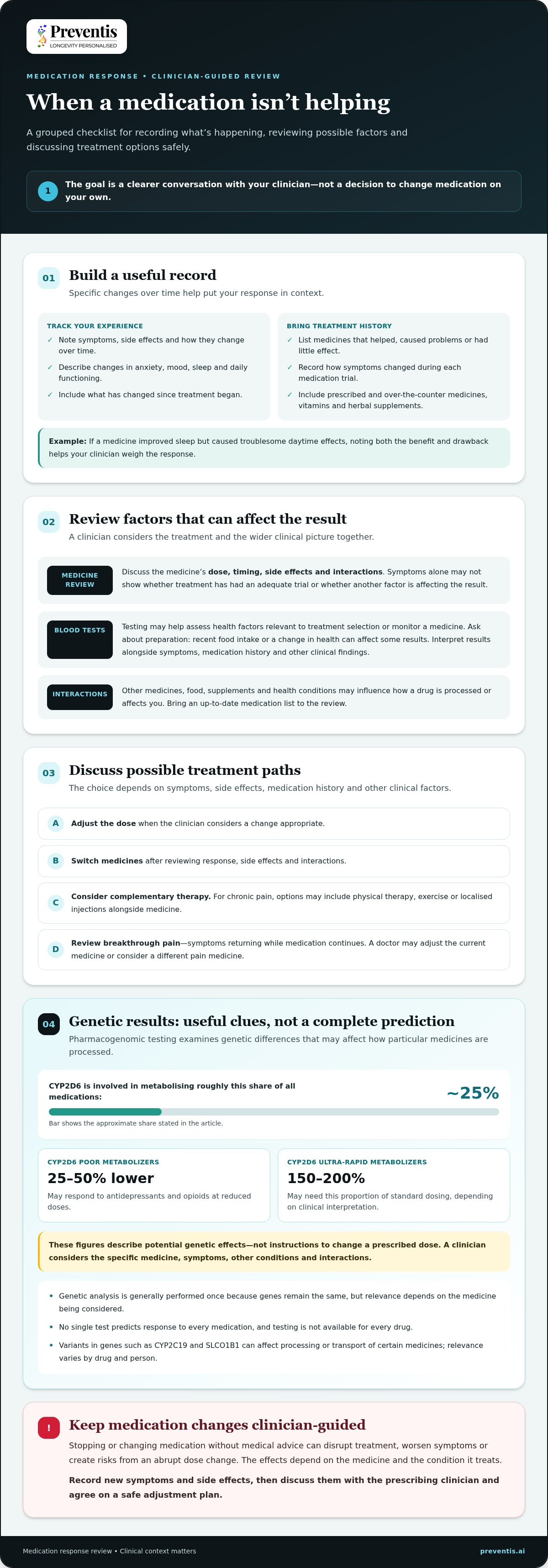
Reasons psychiatric medication may not help or may cause side effects
Medication response can be affected by dose consistency, food, interactions, side effects and changes in health. Tracking these factors gives your clinician clearer information for reviewing treatment.
Tracking Symptoms and Side Effects
A symptom and side-effect record captures changes during treatment, rather than relying on memory at appointments. For each prescribed medicine, note the dose timing, mood, sleep, physical effects and missed doses. For example, record whether nausea follows a dose or anxiety worsens after a change. About 40% of patients with mental illness stop medication within 90 days because of unpleasant effects or no symptom improvement, making early reporting important.
Food and Medication Effectiveness
Food can affect how a medicine is absorbed or works, and some medicines have specific instructions about meals or timing. Follow the directions provided for your medicine, and ask a doctor or pharmacist about food-related instructions. Also mention supplements, vitamins and herbal products, as these can interact with prescribed or over-the-counter medicines and change their effects. A clear list of what you take can help identify possible interactions.
Genes and Medication Side Effects
Genetic differences can affect how the body processes certain medicines and may influence side-effect susceptibility. Pharmacogenomic testing can help indicate which medicines may be more effective or more likely to cause unwanted effects for an individual. It does not explain every reaction. Six genes control how the liver processes roughly 75% of all medications, so genetic information may help frame a clinician’s review of particular treatments.
Diagnosis and Treatment Response
A diagnosis may need review if symptoms change, treatment has little effect or another condition could explain what you’re experiencing. Hormonal issues, poor sleep, stomach conditions and high blood pressure can affect medication response. Tell your clinician about new symptoms and changes in your health rather than assuming the original diagnosis still explains them.
There isn’t one timeline for every medicine: an adequate trial depends on the medication type, class, dose and time taken. Finding an antidepressant may take a couple of attempts, and some people try three or four types; the process may take many months. Up to half of patients respond poorly to their first psychiatric medicine. Discuss persistent symptoms and side effects at follow-up, and don’t stop treatment abruptly on your own.
Managing side effects starts with identifying the pattern and its impact. Record when an effect begins, how long it lasts and whether it interferes with sleep, work or daily tasks. Share the details with the prescriber, who can review interactions, dose or medicine choice. New symptoms after starting treatment also deserve attention, especially if they differ from the mental health condition being treated.
DNA testing and medication reports
A DNA medication report can show how inherited variants may affect the processing of particular medicines. Pharmacogenomic testing focuses on gene-medicine relationships, not diagnosing a mental health disorder or predicting every treatment outcome. Its clearest use is to give a clinician another piece of evidence when considering a specific medicine, possible side effects or dosage. It complements, rather than replaces, symptoms, health conditions and medication history.
One example is warfarin, a medicine whose dose can be influenced by variants in CYP2C9 and VKORC1. CYP2C9 poor metabolizers may require warfarin doses reduced by 25-50%. VKORC1 A allele carriers may require doses reduced by 20-50%. These ranges show why genetic findings can matter, but they are not instructions for changing a dose. A prescriber interprets the result alongside the medicine, clinical context and monitoring needs.
Reports can also explain why a result applies to one medicine but not another. CYP2D6 metabolizes roughly 25% of all medications, yet a result for this enzyme cannot predict responses across the whole medicine cabinet. Testing is relevant to a particular medication being considered, and not every medication has a genetic test available. Genes remain the same, so drug-gene testing generally needs to be performed only once, although its meaning depends on the drug.
For a practical review, match each report finding to the medicine it discusses. Ask which gene or enzyme is involved, whether the result concerns metabolism or side-effect susceptibility, and how it relates to the current dosage. Then bring the report and an up-to-date medication list to the prescribing clinician. This turns a technical result into focused questions about treatment, rather than treating a DNA category as a prescription.
Warfarin also illustrates why a report is only one part of care. VKORC1 A allele carriers are recommended to have INR testing within 3-7 days of starting warfarin therapy. That monitoring checks the medicine’s effect in the individual, while genetic information helps explain a possible dose consideration. The report does not replace clinical monitoring or account for every change in health and other medicines.
For medicines linked to mental health, genetic information may help clarify metabolism and potential response, but it cannot establish whether a diagnosis is correct or guarantee a benefit. A treatment review still weighs symptoms, side effects, other health conditions and your response over time. Use a report as a discussion tool, not as a reason to start, stop or adjust prescribed medication on your own.
To explore how DNA insights can contribute to a broader health picture, explore genetic health insights and discuss relevant findings with your clinician.
PreventisLongevity: Preventis 17 Gene BRCA/Lynch
PreventisLongevity’s Preventis 17 Gene BRCA/Lynch is a genetic testing option focused on BRCA and Lynch-related insights, not medication response. If your question is why a particular medicine may not work as expected, the Preventis MyPharma Panel is the more relevant offering: pharmacogenomic testing can provide insight into how your body genetically processes certain medicines. This information can help frame a discussion with your prescribing clinician, alongside your symptoms, treatment history and other health conditions. It doesn’t replace clinical assessment or tell you to change a prescribed dose. Choose the genetic insight that matches your question, whether that concerns inherited cancer risk or medication response. You’re welcome to visit PreventisLongevity online to explore the relevant testing options.
Make your next health decision with clarity
If you’re still asking why medications do not work for me, turn that question into a focused conversation about what you want treatment to make possible in daily life. Consider which changes matter most to you, what effects feel manageable and what you want your clinician to clarify. These priorities can make the next discussion more personal and purposeful.
Genetic testing has different uses, so choose an offering that matches your question. Preventis MyPharma Panel relates to medication response, while Preventis 17 Gene BRCA/Lynch, Preventis Max Prevention and Preventis Preventive panel address other genetic or preventive health interests. Keeping those aims distinct helps you consider the right information for your goals.
Bring your questions to a clinical conversation and use the information to support, not replace, decisions about prescribed treatment. Contact PreventisLongevity to discuss your options. A clear next step can help you move forward with greater confidence and a plan centred on your health priorities.
Frequently Asked Questions
Why don't all medicines work for everyone?
People can respond differently because a medicine’s effects depend on the drug, the condition being treated and individual biology. One person may experience symptom relief, while another has limited benefit or troublesome effects. If you’re asking, “Why do medications not work for me?”, a poor response to one medicine doesn’t, by itself, mean other treatment options won’t help. Your health history and treatment context matter too.
Can testing me for one drug tell me how I’ll react to other drugs?
No. A pharmacogenomic result relates to the gene and medicine combinations covered by that test; it shouldn’t be treated as a prediction for every drug. A finding relevant to one medicine may not apply to another with different processing pathways. If you’re reviewing a report, ask which specific medicines it addresses and which results are relevant to your current prescription. Your clinician can interpret that information in context.
How do you know which medications to try?
Medicine selection considers the condition, the symptoms you want to improve, your health history and previous treatment responses. Your clinician also weighs side effects, interactions and how a medicine fits your daily routine. For example, explaining whether anxiety disrupts sleep, work or both helps define what improvement would look like. Agreeing on a clear treatment goal makes later reviews more useful than judging a medicine by a vague sense of feeling different.
What are common reasons a medication may not work?
Possible reasons include missed or inconsistent doses, interactions, side effects that make treatment hard to continue, or a medicine that doesn’t suit the condition or person. Changes in health, weight, sleep or routine can also affect response. If you’re still wondering, “Why do medications not work for me?”, note when symptoms occur in relation to doses. That pattern gives your clinician more detail than simply saying treatment feels ineffective.
Can food, alcohol, supplements, or other medicines interfere with medication?
Yes. Food, alcohol, supplements and other medicines can change how some treatments are absorbed or processed. The effect depends on the specific medicine and combination, so don’t assume a product is harmless just because it’s available without prescription. Keep a complete list, including occasional painkillers, vitamins and herbal products. A pharmacist can explain medicine-specific instructions, while your prescriber can review how the full combination fits your treatment.
What should I do if my prescribed medication is not helping?
Arrange a treatment review and bring practical details: when you started, how you take the medicine, which symptoms remain and any unwanted effects. Include changes in sleep or daily functioning, as these can help show whether there’s partial benefit. Keep taking the medicine as prescribed until you receive medical advice, rather than stopping or changing the dose yourself. Your clinician can use this information to consider an appropriate next step.
When should I speak to a GP or pharmacist about a medicine that is not working?
Speak to your GP if symptoms persist, worsen, return or new symptoms appear after starting treatment. Contact a pharmacist for guidance on how to take a medicine, food instructions or possible interactions with over-the-counter products. Bring the medicine packaging or an accurate list of everything you take. If your treatment requires monitoring, keep scheduled checks and raise any concerns about missed tests or changes in your health at follow-up.


