

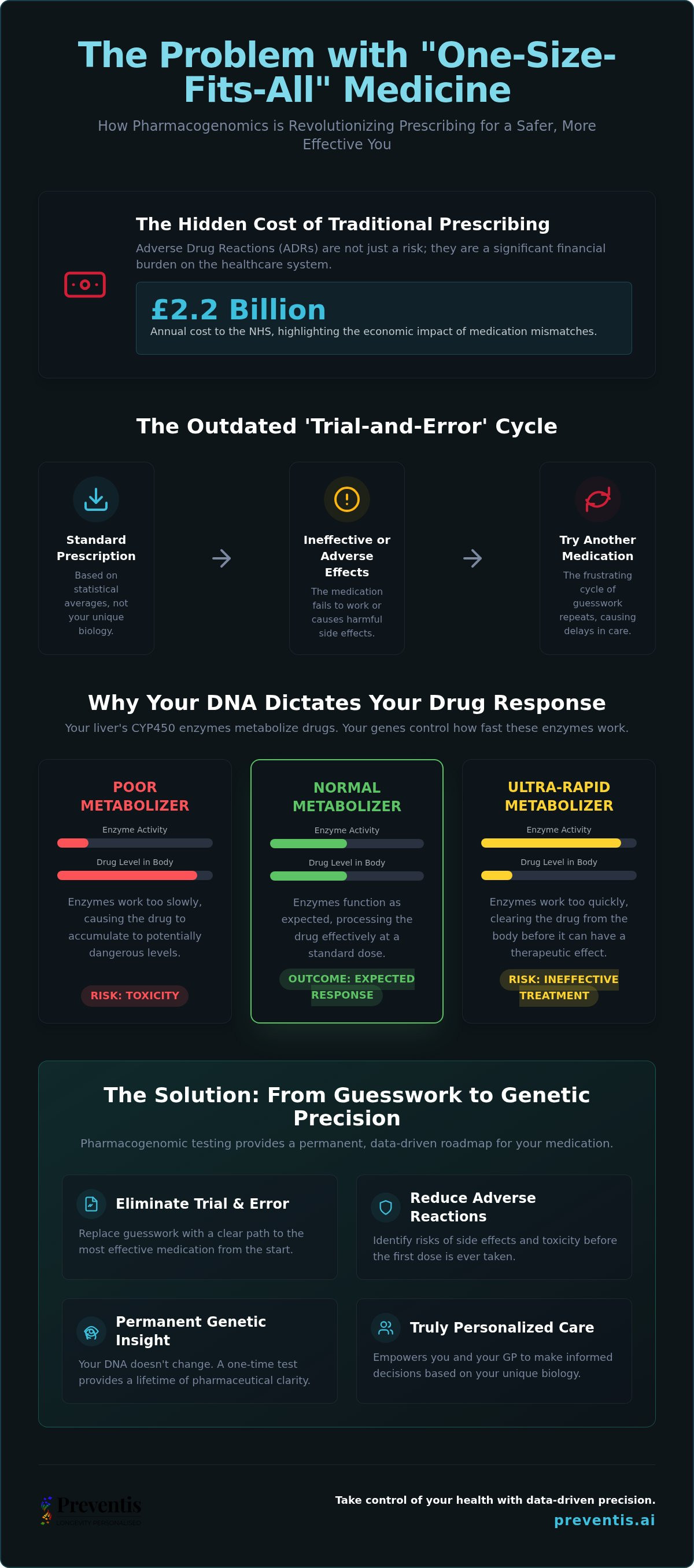
Adverse drug reactions cost the NHS up to £2.2 billion annually; a staggering figure that highlights the hidden risks of traditional, one-size-fits-all prescribing. You've likely experienced the frustration of a medication that didn't work as intended, or perhaps you've feared the side effects of a new treatment. This reactive cycle is no longer the only option, as the rise of pharmacogenomic testing UK wide is finally bridging the gap between clinical research and personal vitality. It's exhausting to feel like a test subject in your own healthcare journey, but the shift toward precision medicine offers a more sophisticated path forward.
By understanding your unique genetic markers, you can replace guesswork with a data-driven roadmap. This guide explores how the Preventis MyPharma Panel eliminates medication trial-and-error through advanced genomic insights, ensuring every prescription is tailored to your biology. We'll preview the latest 2026 regulatory standards, the shift toward proactive prescribing, and how you can secure a permanent record of your drug-response profile to optimize your health for years to come. This transition from the abstract to the practical ensures that your path toward long-term wellness feels seamless and well-supported.
Key Takeaways
- Learn the scientific drivers behind medication failure and how to transition from statistical averages to personalized prescribing strategies.
- Identify the clinical advantages of the Preventis MyPharma Panel as a permanent, high-accuracy reference for your long-term safety and vitality.
- Navigate the current landscape of pharmacogenomic testing UK wide to understand why private genomic insights offer the most direct route to optimized care.
- Gain a practical framework for collaborating with your GP, ensuring your genomic data becomes a functional part of your permanent medical records.
- Discover how precision medication acts as a vital cornerstone for biological resilience when integrated with comprehensive tools like the Preventis Max Prevention.
The Science of Drug Response: Why Medications Fail
Most medical treatments today rely on a statistical average. Doctors typically prescribe a standard dose because it works for the "average" patient, but your biology is unique. This is the foundation of the science of pharmacogenomics (PGx), which examines how your genetic architecture dictates your response to medication. It moves healthcare away from a reactive model toward a strategy of foresight and optimization.
The traditional "trial-and-error" approach is a primary reason why many treatments fail. It's a system built on probability rather than personal requirement, often leading to months of frustration as patients cycle through different prescriptions. By utilizing pharmacogenomic testing UK residents can bypass this outdated process, replacing guesswork with a clear, data-driven roadmap for their health.
Much of this biological processing happens in the liver, specifically through the Cytochrome P450 (CYP450) enzyme family. These enzymes act as the body's internal chemists, breaking down drugs into active or inactive forms. If your genetic code produces enzymes that work too slowly or too quickly, a "safe" dose can suddenly become ineffective or even dangerous.
Poor metabolizers risk drug toxicity as medications accumulate to dangerous levels, whereas ultra-rapid metabolizers may find standard treatments completely ineffective because their bodies clear the substance too quickly.
The Genetic Factor in Adverse Drug Reactions
Adverse drug reactions (ADRs) are a significant burden on the healthcare system, ranking as a leading cause of hospital admissions in the UK and costing the NHS up to £2.2 billion annually. These reactions aren't simply unfortunate accidents; they're often the direct result of a mismatch between a drug's chemistry and a patient's genetic predisposition. Personalized prescribing offers a sophisticated solution to medication anxiety, identifying these risks before the first pill is swallowed to ensure safety and therapeutic success.
Beyond Genetics: The Holistic View of Drug Metabolism
While factors like age, diet, and concurrent medications certainly influence how you process a drug, your genetic markers remain the most stable variable in your health profile. Unlike your weight or your environment, your DNA doesn't change over time. Investing in pharmacogenomic testing UK wide provides a permanent reference for your medical records. It's a one-time investment that offers a lifetime of pharmaceutical clarity, acting as an essential companion to your long-term longevity strategy.
The Preventis MyPharma Panel: A Clinical-Grade Reference
The Preventis MyPharma Panel represents the pinnacle of proactive drug management. It's built on a foundation of clinical-grade, high-accuracy genomic sequencing, providing you with a definitive reference for your biological response to medication. While standard healthcare often waits for a reaction to occur before adjusting a prescription, this panel allows you to anticipate those reactions. It's the premium standard for pharmacogenomic testing UK residents use to secure a future of optimized health and refined medical care.
The panel covers a wide spectrum of essential medication categories, including antidepressants, statins, and painkillers. By identifying your unique genetic markers, we provide a clear roadmap that eliminates the uncertainty of traditional prescribing. If you're looking to refine your health strategy, exploring the Preventis MyPharma Panel is a logical first step toward precision wellness and pharmaceutical clarity.
Mental Health and Antidepressant Precision
Finding the right mental health support can be an arduous journey. Many patients face a high failure rate with their initial SSRI prescriptions, leading to a cycle of side effects and diminished hope. The MyPharma Panel brings calm assurance to this process by identifying which medications your body will actually tolerate and metabolize effectively. It delivers the "right drug, right dose" framework, transforming mental wellness from a series of experiments into a predictable, data-driven reality. This foresight is central to our mission of fostering long-term vitality and optimism.
Cardiovascular and Pain Management Insights
Precision is equally critical in managing cardiovascular health and chronic pain. The MyPharma panel provides vital insights into how you process blood thinners like Clopidogrel and various statins. According to the Phase II expansion of the Pharmacogenetics Roll Out Gauging Response to Service study, nearly 50% of participating patients had a change in their medication choice or dosage following a genomic review. This level of insight is particularly important for avoiding opioid sensitivity or complications from NSAIDs. For those seeking a more comprehensive view of their heart health, this panel serves as an essential companion to Preventis Whole Genome Sequencing.
While NHS Pharmacogenomic Testing Availability is increasing for specific clinical needs, private access through Preventis ensures you don't have to wait for a medical crisis to gain these insights. This proactive approach allows you to build a resilient, future-proof health profile today, ensuring your medical records are always backed by the latest genomic science.
Navigating Pharmacogenomic Testing in the UK: Private vs. NHS
The UK's healthcare system is currently undergoing a significant genomic transformation, but accessibility remains uneven. While the NHS has integrated certain tests into its National Genomic Test Directory, these are largely reserved for specific clinical cases such as oncology or rare diseases. This creates a "qualification gap" where many individuals who would benefit from personalized prescribing find themselves ineligible for testing via their GP. For those seeking to optimize their health before a crisis occurs, pharmacogenomic testing UK services offered privately provide the most direct route to clarity.
Choosing the private path isn't just about bypassing waiting lists; it's about the depth of the data you receive. The Preventis MyPharma Panel offers a proactive alternative to the reactive nature of standard care. When we weigh the investment of a single test against the cumulative cost of years spent on ineffective medications or managing chronic side effects, the value of precision becomes undeniable. It's a strategic move for your future self, ensuring that every future prescription is backed by your unique biological data.
The Private Advantage: Speed and Scope
Speed is a critical factor in modern health optimization. In 2026, private genomic results are typically processed and delivered with a level of efficiency that standard clinical pathways cannot match. Beyond speed, private panels often analyze a wider array of gene-drug pairs. This comprehensive scope means you aren't limited by the restricted protocols of public health services. By adopting this visionary approach, you ensure your treatment plan reflects the full complexity of your DNA, staying well ahead of the standard care curve.
Data Privacy and Ownership in the UK
We treat your genetic information with the same clinical rigor we apply to our analysis. PreventisLongevity adheres to the UK’s stringent data protection standards, ensuring your genomic roadmap is stored with clinical-grade security. A key benefit of private testing is total data ownership. You possess a data-driven document for your medical records that you can share with any healthcare provider. This empowers you to act as an informed partner in your own care, providing your GP with the precise information they need to make safer, more effective prescribing decisions.
From Data to Decisions: Integrating Results into Your Healthcare
Possessing a genomic report is only the first step; the true value of pharmacogenomic testing UK services lies in the practical application of that data within your clinical care. It is essential to understand the boundary between data provision and medical practice. While the Preventis MyPharma Panel delivers high-accuracy genomic insights, any changes to your medication, dosage, or timing must be authorized by your GP or a qualified specialist. This collaborative approach ensures that your genetic profile is integrated safely into your broader medical history.
Your local clinical pharmacist is often a powerful ally in this transition. Many pharmacists in the UK are now trained as genomic leads, capable of utilizing your report to perform advanced safety checks. They can cross-reference your genetic markers against current prescriptions to flag potential adverse reactions before they occur. To begin this journey, you might say to your doctor: "I have invested in a private pharmacogenomic report to understand my genetic response to medications, and I would like to review these findings with you to ensure my prescriptions are as safe and effective as possible."
The Insight-to-Action Framework
To move from raw data to a refined health strategy, we recommend a methodical three-step approach:
- Step 1: Receive and review your MyPharma Panel report to identify any "red flag" medications or dosage requirements.
- Step 2: Schedule a consultation with your GP or a specialist to discuss the clinical implications of these findings.
- Step 3: Formally update your medical records, ensuring that the data acts as a permanent safeguard for every future prescription.
By following this structure, you transform a laboratory result into a functional tool for longevity. If you are ready to secure this biological roadmap, you can order the Preventis MyPharma Panel to begin your journey toward precision care.
Overcoming Clinical Skepticism
While the NHS is moving toward routine genomic use, some GPs may still be unfamiliar with private genomic reports. In these instances, positioning yourself as a proactive partner in your own care is vital. You can support your report by referencing internationally recognized, evidence-based guidelines such as those from the Clinical Pharmacogenetics Implementation Consortium (CPIC) or the Dutch Pharmacogenetics Working Group (DPWG). These organizations provide the clinical peer-reviewed standards that validate your results, making it easier for your doctor to transition from skepticism to action. This evidence-based approach ensures your path from curiosity to optimization feels well-supported and scientifically rigorous.
Optimising Your Biological Future with PreventisLongevity
True longevity is built on the foundation of foresight. While traditional medicine often waits for symptoms to manifest before intervening, the philosophy of optimization requires a more proactive stance. Pharmacogenomics is not merely a clinical utility for the present; it's a cornerstone of your biological resilience. By integrating pharmacogenomic testing UK residents can transform their genetic data from a passive code into a clear, actionable roadmap for a lifetime of health. This shift ensures that your medical trajectory is defined by precision rather than probability.
The Preventis MyPharma Panel is designed to function as a lifelong asset, providing the data-driven clarity needed to navigate the complexities of modern pharmacology. It serves as an essential component of a broader health strategy, pairing seamlessly with comprehensive diagnostic tools like the Preventis Max Prevention. When you understand your unique drug-response profile, you gain a level of control over your biological future that was previously unattainable. You're no longer solving a current sickness; you're future-proofing your vitality.
Building Your Personalized Longevity Roadmap
A sophisticated health strategy requires a multi-dimensional approach. While the MyPharma Panel optimizes your medication response, it achieves its full potential when used as an essential companion to Whole Genome Sequencing. This synergy allows for a holistic view of your health, combining pharmacogenomic insights with advanced cancer and cardio screening. By identifying genetic predispositions alongside drug-metabolism markers, you create a comprehensive defense against the leading causes of age-related decline. This integrated framework ensures that every intervention is tailored to your specific genetic signature, maximizing efficacy while minimizing risk.
A Legacy of Health and Foresight
There is a profound emotional benefit in knowing you've secured the safest possible medical path for yourself. This sense of calm assurance stems from the knowledge that your healthcare is backed by clinical-grade genomic analysis rather than statistical averages. As the landscape of UK healthcare continues its transition from reactive to proactive models, those who embrace precision medicine today are positioning themselves at the forefront of this evolution. We invite you to explore the full PreventisLongevity suite, where advanced science meets personalized care to facilitate your long-term vitality. Take control of your medication strategy today and ensure your biological future is as refined and resilient as possible.
Securing Your Lifelong Health Strategy
The journey from reactive medicine to biological optimization begins with a single, data-driven decision. By choosing pharmacogenomic testing UK residents can finally move beyond the frustrations of trial-and-error prescribing. This guide has illustrated how your unique genetic markers dictate your response to common medications, and why maintaining a permanent, clinical-grade record is essential for your long-term vitality.
The Preventis MyPharma Panel offers more than just a list of drug interactions; it provides a sophisticated roadmap for safer, more effective healthcare. It's a tool that bridges the gap between the laboratory and your daily wellness, ensuring every future prescription is tailored specifically to your body's requirements. This level of foresight is no longer a luxury but a cornerstone of modern longevity and refined medical care.
Take the final step in future-proofing your health profile. You can optimise your medication strategy with the Preventis MyPharma Panel to ensure your medical path is always guided by clarity and precision. Your biological future is waiting; ensure it's built on a foundation of data and confidence.
Frequently Asked Questions
Is pharmacogenomic testing available on the NHS in the UK?
Yes, but availability is currently restricted to specific clinical indications listed in the National Genomic Test Directory. While the NHS is embedding these services into routine care, many patients don't qualify for testing through their GP unless they have a severe condition. Private pharmacogenomic testing UK services provide immediate access for those seeking to optimize their medication strategy proactively before a medical crisis occurs.
How much does private pharmacogenomic testing cost in the UK?
Private testing costs in the UK typically range from £300 to £400 for comprehensive panels, though some specialized mental health services can be significantly higher. This investment covers the clinical-grade laboratory analysis and the delivery of a detailed drug-response report. Many individuals weigh this one-time fee against the long-term expense and health impact of ineffective medications or managing chronic side effects from standard dosing.
Can a DNA test tell me which antidepressant will work best for me?
A pharmacogenomic test identifies how your body metabolizes specific classes of antidepressants, such as SSRIs and SNRIs. By analyzing enzymes like CYP2D6, the test helps clinicians determine if you're likely to experience side effects or if a standard dose will be ineffective. This data-driven approach allows for the "right drug, right dose" strategy, significantly reducing the frustration of the traditional trial-and-error method in mental health care.
Will my GP accept the results of a private MyPharma Panel?
Most GPs will accept clinical-grade reports, especially when they're backed by internationally recognized guidelines like CPIC or DPWG. It's important to remember that Preventis provides the genomic data, while your doctor remains responsible for making any actual prescription changes. Presenting your report as a proactive partner in your care helps your GP integrate these insights into your permanent medical records for safer future prescribing.
How long does it take to get pharmacogenomic test results?
Private genomic results are typically processed and delivered within two to four weeks of the laboratory receiving your sample. This efficient turnaround allows you to begin optimizing your health strategy much faster than standard clinical pathways might allow. Once your results are ready, you'll receive a comprehensive report that acts as a permanent roadmap for your biological response to a wide range of medications.
Do I need to take the pharmacogenomic test more than once in my life?
You only need to take a pharmacogenomic test once in your lifetime because your genetic markers for drug metabolism don't change. The DNA that dictates how your liver enzymes process medications remains constant from birth. This makes the test a permanent investment in your health, providing a data-driven document that stays relevant regardless of how many new medications you might be prescribed in the future.
Can pharmacogenomics help prevent adverse drug reactions?
Pharmacogenomics is a powerful tool for preventing adverse drug reactions, which cost the NHS billions annually. By identifying "Poor Metabolizers" at risk of toxicity or "Ultra-rapid Metabolizers" who may find drugs ineffective, the test provides a safeguard against dangerous medication mismatches. This proactive insight allows your medical team to adjust dosages or select alternative treatments before you swallow the first pill.
Is my genetic data safe with private UK testing companies?
Reputable private testing companies in the UK must adhere to stringent data protection standards, including UK GDPR and NHS Digital security protocols. Your genomic data is treated with clinical-grade rigor, ensuring it's stored and processed securely. At PreventisLongevity, we prioritize your privacy, framing your genetic information as a secure, personal asset that empowers your future healthcare decisions without compromising your sensitive biological data.


