

What if the most useful first step in a proactive cardiac health screen isn’t another test, but a clearer picture of your inherited risk? Heart-related risks can develop without obvious symptoms, so feeling healthy doesn’t always reveal the full picture.
It’s understandable to want more than a “wait and see” approach, while also wondering which checks help assess future risk and which investigate a problem that is already suspected. Genomic information can add context, but it doesn’t replace clinical assessment or measurements such as cholesterol and blood pressure.
This guide explains how to combine genetic insight with conventional risk assessment, so you can make informed decisions and discuss relevant findings with your physician. Preventis Men’s Cancer Cardio and Preventis Women’s Cancer Cardio panels are options for exploring genomic information. Preventis Whole Genome offers a broader genomic testing option.
You’ll learn what DNA can and can’t tell you, how predictive screening differs from diagnostic testing, and how to prepare useful questions and information for your physician.
Key Takeaways
- A proactive cardiac health screen combines inherited risk insights with personal and family health information for a more complete starting point.
- Distinguish screening, which helps assess future risk, from diagnostic testing, which investigates a suspected condition.
- Use your family history and life stage to prepare useful information and questions for your physician.
- Explore whether Preventis Men's Cancer Cardio or Preventis Women's Cancer Cardio fits your interest in genomic screening.
- Consider how broader genomic testing, including Preventis Whole Genome, may contribute to longer-term health planning.
What is a Proactive Cardiac Health Screen?
A proactive cardiac health screen looks for factors that may shape your future cardiovascular risk, rather than waiting for symptoms to prompt investigation. It brings together inherited predisposition, current health information and, when appropriate, clinical assessment. The aim isn’t to predict exactly what will happen or replace your physician’s care. It’s to create a more individual starting point for decisions about prevention and long-term cardiac health.
A screening test estimates risk in someone who may feel well. A diagnostic test investigates a particular symptom or suspected condition. Blood pressure and cholesterol measurements can identify important risk factors, but neither alone reveals the full picture. The overview of Cardiovascular risk screening explains that risk assessment draws on multiple factors and methods. The appropriate next step depends on your circumstances and should be discussed with a healthcare professional.
The Reactive vs. Proactive Mindset
Reactive care focuses on assessing and treating a problem once symptoms or other warning signs arise. Proactive care asks what could influence risk earlier, including family history, lifestyle, blood pressure, cholesterol and inherited factors. This approach can make early information a starting point for a considered conversation with your physician. The goal is cardiac longevity, supporting heart health over time rather than seeking certainty from a single test.
The Three Pillars of Comprehensive Screening
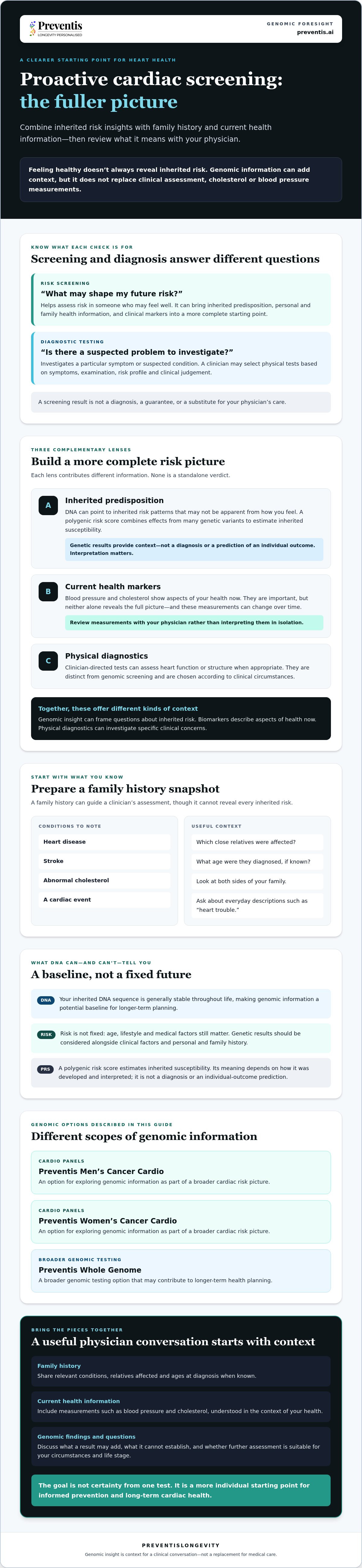
A fuller view combines three complementary kinds of information. Each answers a different question, and none should be treated as a standalone verdict:
- Genomic predisposition: Your inherited blueprint can point to risk patterns that may not be apparent from how you feel today. Genetic results provide context, not a diagnosis, and need careful interpretation alongside personal and family history.
- Biomarker analysis: Measurements such as cholesterol and blood pressure show aspects of your current health. They can change over time, so review results with your physician rather than interpreting them in isolation.
- Physical diagnostics: Clinician-directed tests can assess the heart’s function or structure when appropriate. These are distinct from genomic screening and may be selected based on symptoms, examination, risk profile and clinical judgement.
These pillars work best together. Genomic insight may help frame questions about inherited risk, biomarkers show aspects of your health now, and physical diagnostics can investigate specific clinical concerns. Preventis Men’s Cancer Cardio and Preventis Women’s Cancer Cardio panels offer a way to explore genomic information as part of that broader picture. Share relevant findings with your physician, who can help determine whether further assessment is suitable.
Assessing Your Cardiovascular Risk Profile
A useful risk profile involves more than a snapshot of today’s blood pressure or cholesterol. Those measurements matter, but they can’t show every inherited tendency or capture how risk may change over time. A proactive cardiac health screen can bring together family history, genetic information and current clinical markers, giving you a structured set of questions to review with your physician.
Build a Family History Audit
Write down which close relatives experienced heart disease, stroke, abnormal cholesterol or a cardiac event, along with their age at diagnosis if known. Look for patterns on both sides of your family, and ask relatives about conditions they may describe in everyday terms, such as “heart trouble.” This history can guide a clinician’s assessment, but it won’t reveal every inherited risk. Relatives may have different genes, lifestyles and health experiences.
The Genetic Angle: Beyond Family History
DNA adds a layer that family stories and routine measurements may not show. Some inherited variants can influence lipid metabolism or biological pathways related to inflammation. A polygenic risk score (PRS) combines the effects of many genetic variants to estimate inherited susceptibility. A PRS is not a diagnosis or a prediction of an individual outcome. Its meaning depends on how it was developed and interpreted, and it should be considered alongside clinical factors.
Unlike cholesterol or blood pressure, your inherited DNA sequence is generally stable throughout life. That makes genomic information a potential baseline for long-term planning, although risk itself isn’t fixed: age, lifestyle and medical factors still matter. Learn more about heart health DNA screening as one way to explore this genetic dimension. The American Heart Association’s guide to key heart health screenings also outlines established checks such as blood pressure and cholesterol measurement.
Biomarkers to Discuss With Your Physician
Ask your physician which measurements make sense for your history and overall profile. These markers provide different information, and no single result gives a complete risk assessment:
- Lipoprotein(a), or Lp(a): A largely inherited blood lipid that isn’t routinely captured by a standard cholesterol result. Ask whether measuring it is appropriate for you.
- Apolipoprotein B (ApoB): A measure related to the number of cholesterol-carrying particles. It can provide complementary information to LDL cholesterol rather than replacing every standard measure.
- High-sensitivity C-reactive protein (hs-CRP): A marker associated with inflammation. It is nonspecific, so results need interpretation in clinical context.
For a genomic starting point, explore Preventis Men’s and Women’s Cancer Cardio panels and discuss any relevant findings with your physician. Genetic insight is most useful when it informs, rather than replaces, a broader cardiovascular assessment.
Choosing the Right Screen for Your Life Stage
The most useful screening plan depends on more than your age. Family history, existing health factors, sex, life stage and personal priorities all help shape what to discuss with your physician. A proactive cardiac health screen is a way to gather relevant information, not a fixed checklist or substitute for clinical advice. The Heart Disease Risk Assessment overview explains how factors such as health history and test results can contribute to an overall assessment.
Your 30s or 40s can be a practical time to begin a prevention conversation, particularly if cardiovascular conditions run in your family or you want a baseline for future comparison. That isn’t a universal age threshold. A clinician can help determine timing and next steps based on your circumstances. Revisit your plan as your health, family history and life stage change.
Gender-Specific Considerations
Cardiovascular risk and symptoms don’t always present in the same way for everyone. Women may experience signs that differ from the familiar chest-pain pattern, and pregnancy-related or menopause-related changes can be relevant context to share with a clinician. Explore the women’s cancer and cardio genetic test as a resource on genetic screening. For men, family history and individual health factors remain central; the men’s genetic health screening UK guide offers further context. Genetic insights can complement, but not replace, appropriate clinical evaluation.
Match the Tool to the Question
Home-based genomic testing and clinical imaging serve different purposes. A genomic panel can provide information about inherited predispositions without examining the heart’s current structure. Imaging, when a physician considers it appropriate, can assess particular physical features but doesn’t explain every inherited risk. Neither approach is a universal substitute for the other. Discuss the purpose, limitations and suitability of any proposed test with your healthcare professional.
Screening for High-Performance Lifestyles
Busy professionals may value an organised view of health risks to inform longer-term decisions about wellbeing and vitality. That “executive health” mindset should mean thoughtful, physician-guided prevention, not indiscriminate testing. Preventis Max Prevention is one genomic panel to consider when seeking broader preventive insights. For a more expansive genomic perspective, Preventis Whole Genome may offer a wider view of inherited health information. You can explore Preventis genomic testing options and discuss which, if any, fits your goals with your physician.
Step-by-Step: How to Execute Your Proactive Strategy
A proactive cardiac health screen is most useful when each result informs a sensible next step. Genomic testing can help establish an inherited-risk baseline, but it doesn’t diagnose heart disease or determine which clinical tests you need. Treat the process as a sequence of informed decisions, with your physician helping interpret findings in the context of your health.
- Choose a relevant panel. Start with what you want to learn, then review the panel’s scope before ordering. Preventis Men’s Cancer Cardio and Preventis Women’s Cancer Cardio are options for exploring genomic information. Discuss whether either suits your circumstances.
- Collect and return your sample. Follow the instructions supplied with the home-based kit. Correct collection and return help ensure the sample can be processed as intended.
- Review the report carefully. Note the findings, limitations and questions you want to raise. Genetic results indicate predisposition, not certainty, so don’t treat a risk marker as a diagnosis or make major health decisions from it alone.
- Agree on follow-up. Share relevant findings with your physician. Together, you can decide whether biomarkers such as cholesterol or Lp(a), or clinical investigations such as imaging, are appropriate for your profile.
From Data to Actionable Lifestyle Changes
Genetic information can help focus a conversation about prevention, but it shouldn’t dictate a diet, exercise plan or treatment. Use your report to prepare specific questions, then consider recommendations alongside your medical history, current measurements and preferences. This turns an abstract result into a practical discussion about sustainable habits. Structured information may help you identify clearer questions, while remembering that no test can remove all health risk.
Long-Term Monitoring and DNA Health Scores
Think of screening as an ongoing record, not a one-time verdict. Preventis MyHealthscore may provide a point of reference within your broader health planning. Ask what its results represent and how to interpret them. Record clinical measurements and review them with your physician at intervals suited to your needs. An annual review may be useful for some people, but your clinician can advise on appropriate timing.
For a broader inherited-health perspective, read about whole genome sequencing for prevention. Preventis Whole Genome may support a wider longevity roadmap, while the right scope depends on your goals and how results will be used. To explore the available genomic testing options, view Preventis testing options, then bring relevant findings to your physician for interpretation.
The Preventis Approach: Precision Genomic Foresight
Genomic insight can add an inherited-risk perspective to a proactive cardiac health screen, helping you ask more informed questions about prevention. PreventisLongevity offers genomic testing kits, including Preventis Men’s Cancer Cardio and Preventis Women’s Cancer Cardio. These targeted options can be considered as part of a broader discussion about cardiovascular risk and cancer predisposition. Their results provide information to discuss with a physician, not a diagnosis or a guarantee about future health.
PreventisLongevity offers genomic analysis through testing kits. Their practical value lies in providing genetic information that may support longer-term health planning. Genomic results still require careful interpretation, and their significance depends on personal history and other clinical factors. They complement, rather than replace, a physician’s assessment and any recommended physical tests.
Sophisticated Science, A Clearer Experience
Home-based testing offers a way to explore genomic information without an in-person clinical procedure. Before choosing a test, review what it covers, how results are presented, and the provider’s information on privacy and data handling. Clear answers help you understand what you’re consenting to and how you might use the report. The aim is not simply to search for disease, but to use relevant insights as part of a thoughtful plan for vitality and long-term wellbeing.
Choose a Starting Point That Fits Your Goals
Different panels offer different scopes. Consider what you want to learn, then review the available options with your physician:
- Targeted cardiovascular insight: Preventis Men's Cancer Cardio and Preventis Women's Cancer Cardio are specialized panels to consider when exploring genomic risk.
- Broader prevention: Preventis Max Prevention is an option for those considering a wider preventive perspective. Review the panel’s scope to decide whether it fits your goals.
- Foundational or expanded genomic insight: Preventis Preventive panel and Preventis Whole Genome are additional options. Whole Genome can be considered for a broader inherited-health perspective, not as a promise of complete certainty.
No panel can offer total peace of mind or replace appropriate medical care. The value is in having relevant information to discuss, questions to pursue and a clearer basis for future decisions. Check the provider’s privacy information, understand the test’s scope, and plan to review meaningful results with your physician. That’s how genomic information can become one considered part of a personal approach to cardiac longevity.
Make Your Next Heart-Health Decision More Informed
A proactive cardiac health screen is most valuable when it helps you make thoughtful choices, not when it’s treated as a prediction or diagnosis. Combining inherited-risk information with your health history and physician-guided assessment can create a more personal foundation for prevention. Results are a starting point for informed conversations and ongoing decisions about your wellbeing.
Preventis offers genomic testing panels, including Preventis Men's Cancer Cardio and Preventis Women's Cancer Cardio. These options can help you explore inherited risk and consider how genomic information fits into longer-term health planning. For broader genomic insight, review how a panel’s scope aligns with your goals and discuss relevant findings with your physician.
Explore PreventisLongevity’s genomic and preventive health panels to find an option that aligns with your goals.
Frequently Asked Questions
Is a proactive cardiac health screen necessary if I exercise and eat well?
Healthy habits lower important cardiovascular risks, but they can’t rule out every inherited predisposition or silent risk factor. A proactive cardiac health screen may help you and your physician consider your family history, blood pressure, cholesterol and, where appropriate, genetic information together. Whether additional screening makes sense depends on your personal health profile. Discuss your goals and concerns with a healthcare professional rather than assuming that good fitness alone tells the whole story.
What is the difference between a standard heart check and a genomic cardiac screen?
A standard heart check typically assesses current health through measures such as blood pressure, cholesterol and clinical evaluation. A genomic cardiac screen analyses selected genetic information to identify inherited predispositions. The two provide different kinds of insight: one reflects aspects of your health now, while the other offers context about inherited risk. Neither is a complete assessment on its own, and genetic findings should be interpreted alongside your personal history and clinical results.
Can a genetic test predict a heart attack?
No genetic test can reliably tell you whether or when you’ll have a heart attack. Genetic testing can identify certain inherited risk factors, but it can’t account for every influence on cardiovascular health or predict an individual outcome with certainty. A result is best understood as one piece of a broader risk profile. Review relevant findings with your physician, who can consider them alongside symptoms, family history, lifestyle and clinical measurements.
How often should I undergo proactive cardiac screening?
There isn’t one screening schedule that suits everyone. The appropriate timing for checks such as blood pressure or cholesterol assessment depends on your health, age, family history and previous results. Discuss an individual follow-up plan with your physician, and ask which measurements need to be repeated and when. Genomic results can provide longer-term information about inherited predisposition, but they don’t replace ongoing clinical assessment as your health circumstances change.
What genes are analyzed in a cardiovascular risk assessment kit?
The genes assessed depend on the specific panel, so check its stated scope before testing rather than assuming every kit analyses the same markers. Preventis Men’s Cancer Cardio and Preventis Women’s Cancer Cardio are specialized genomic panels, but the information provided here doesn’t specify their individual gene lists. Ask the provider what the panel examines, how results are interpreted and what its limitations are. A genetic result indicates predisposition, not a diagnosis.
Will my private health insurance cover proactive cardiac screening in the UK?
Coverage depends on your insurer, policy terms and the type of screening. Don’t assume a private policy will pay for preventive genomic testing or assessments when you have no symptoms. Before arranging a test, ask your insurer whether it’s covered, whether referral or pre-authorisation is required, and what exclusions or limits apply. You can also confirm directly with the test provider what the service includes, so you understand any costs before proceeding.
What happens if my proactive screen identifies a high risk?
A high-risk result is a reason to seek professional interpretation, not proof that you have heart disease or will develop it. Share the report with your GP or cardiologist, along with your family history and any existing health information. They can explain what the finding means for you and whether clinical checks or follow-up are appropriate. Don’t start, stop or change medication or make major health decisions based only on a genetic result.
Is home-based genetic testing as accurate as hospital-based screening?
These tests answer different questions, so accuracy isn’t a simple comparison. A home-based genomic kit analyses a sample for genetic information; clinical screening may measure current health or investigate a suspected condition. A genomic kit is not a substitute for clinical assessment or diagnostic testing. Follow the kit’s collection instructions and discuss results with a healthcare professional who can interpret their relevance.


