

What if the traditional divide between oncology and cardiology is obscuring your greatest preventive advantages? For years, women have balanced fragmented appointments, attending routine breast screenings and heart checks in total isolation. Many carry quiet anxieties about complex family medical histories that do not meet standard public screening thresholds, left to wonder where their true risks lie. Can one screening assess both areas simultaneously? Choosing a comprehensive women's cancer and cardio genetic test bridges this clinical gap, pairing advanced dual-pathway genomics with an empowering baseline for your long-term vitality.
You don't have to rely on reactive medicine or direct-to-consumer ancestry reports that lack clinical utility. In this article, you'll discover how targeted multi-gene analysis identifies hereditary markers across both vital systems, replacing uncertainty with informed foresight. We outline a clear, actionable preventive health checklist that links clinical genetic insights directly to proactive surveillance, optimized lifestyle protocols, and confident discussions with your doctor.
Key Takeaways
- Hereditary risks for cardiovascular conditions and female oncological diseases often intersect, making isolated screenings an incomplete approach to lifelong wellness.
- A specialized women's cancer and cardio genetic test utilizes clinical-grade next-generation sequencing to evaluate high-impact variants before symptoms ever emerge.
- Actionable genomic reports transform abstract DNA markers into an organized health checklist, optimizing surveillance intervals and daily lifestyle protocols.
- Clinical-grade home collection kits bridge the gap between superficial consumer ancestry tests and restrictive public screening criteria across the UK.
- Targeted multi-gene analysis provides an empowering baseline for informed collaborative discussions with your physician, eliminating the need for in-person diagnostic visits.
Why Women's Preventive Health Checkups Must Unify Cancer and Cardiovascular Genetics
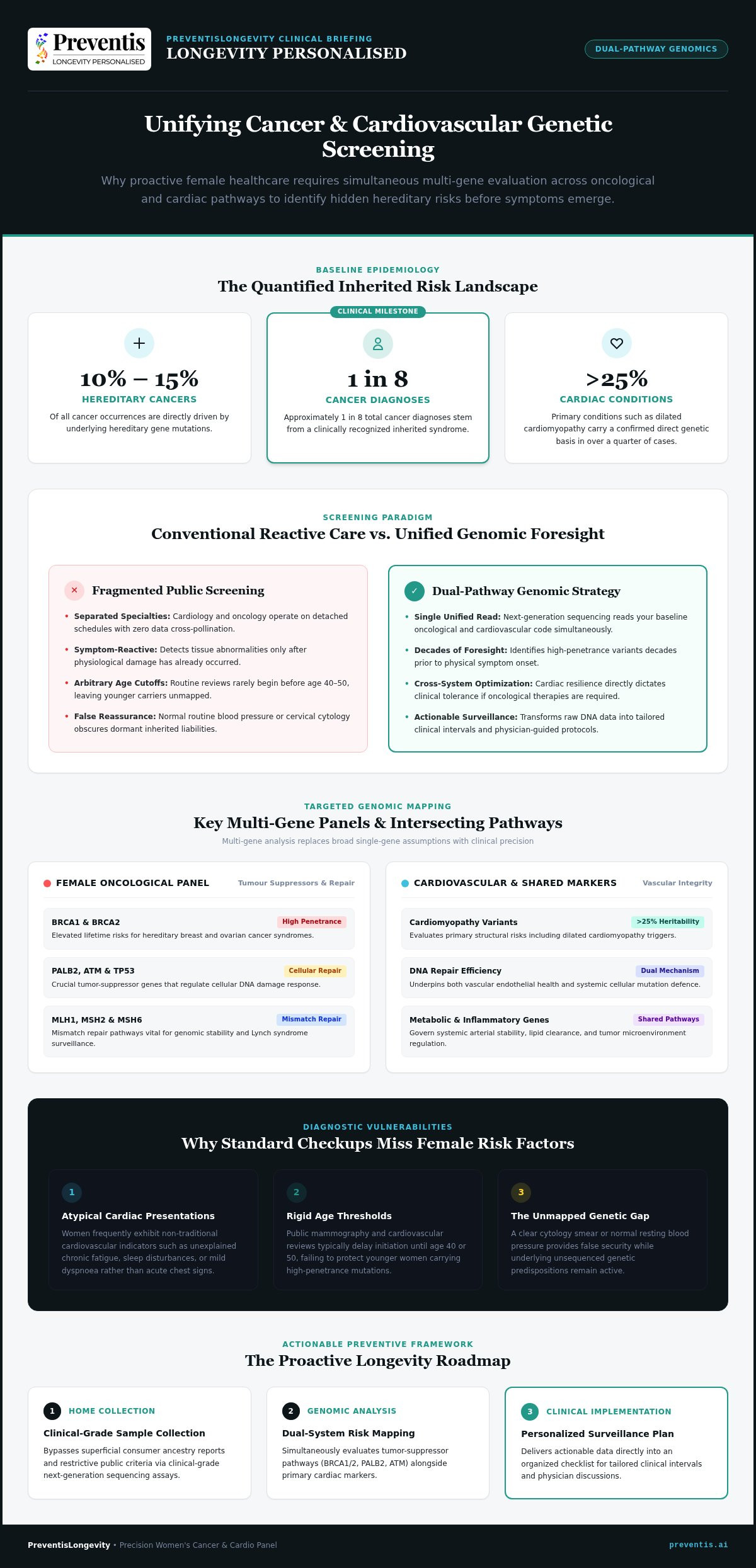
Mainstream public healthcare models routinely separate cardiology and oncology into distinct specialties. A routine annual review might check your blood pressure and cholesterol, while mammography and cervical cytology operate on entirely detached schedules. While these exams monitor current biological status, they fail to reveal inherited liabilities before physiological damage occurs. Integrating targeted multi-system DNA analysis transforms standard annual checkups into proactive longevity strategies, identifying underlying vulnerabilities decades before physical signs appear.
Inherited vulnerabilities represent a vital starting point for comprehensive wellness. Only 10-15% of cancers are hereditary, and approximately 1 in 8 cancer diagnoses stem from a recognized inherited syndrome. Similarly, primary cardiac conditions such as dilated cardiomyopathy carry a genetic basis in over 25% of cases. A clinical-grade women's cancer and cardio genetic test reads your baseline blueprint once, delivering an empowering foundation that informs lifelong medical vigilance rather than waiting for an unexpected clinical incident.
The Hidden Overlap Between Oncology and Cardio Health
Far from operating as isolated systems, cardiac performance and cellular protection share deep biological mechanisms. DNA repair efficiency, metabolic balance, and systemic inflammatory pathways govern both vascular stability and tumor suppression. Conditions such as Hereditary Breast and Ovarian Cancer Syndrome show why evaluating these dual pathways concurrently is essential. If oncological treatment ever becomes necessary, your baseline cardiac resilience directly dictates clinical tolerance. Identifying genetic risks across both systems simultaneously provides a truly integrated health strategy.
Limitations of Symptom-Led Female Screenings
Conventional screenings are fundamentally reactive. They excel at identifying tissue changes that have already developed, but they offer zero insight into your lifelong predispositions. This reactive threshold poses significant challenges for women's healthcare:
- Atypical cardiac presentations: Women frequently experience subtle cardiovascular signs, such as unexplained fatigue, sleep disturbances, or mild dyspnoea, rather than standard acute indicators.
- Arbitrary age thresholds: Public mammograms or routine cardiovascular reviews rarely begin before age forty or fifty, leaving younger women with inherited variants unprotected.
- Absence of genetic insight: Normal blood pressure or clear cervical cytology can create false reassurance while underlying variants remain unmapped.
Utilizing a comprehensive women's cancer and cardio genetic test provides an objective baseline. Instead of navigating isolated clinical appointments, you gain the precise data needed to personalize surveillance timelines alongside your healthcare provider.
Key Genes Evaluated in a Women's Cancer and Cardio Genetic Test
Modern clinical panels harness next-generation sequencing to evaluate dozens of targeted genes in a single assay. Rather than relying on isolated single-gene checks, an advanced women's cancer and cardio genetic test sequences high-penetrance variants across oncology and cardiology simultaneously. This unified read provides clear, data-driven markers that replace broad assumptions with precise biological facts, allowing you and your physician to shape surveillance around your actual genetic code.
Hereditary Cancer Risk Markers: Beyond BRCA1 and BRCA2
Clinical discussions around hereditary malignancy frequently center on BRCA1 and BRCA2. Mutations in these genes significantly elevate lifetime risks for breast and ovarian cancers, but comprehensive evaluation requires a much broader lens. Modern multigene panels examine additional tumour-suppressor genes such as PALB2, ATM, and TP53, which govern vital cellular repair pathways. As outlined in federal clinical guidance on genetic testing for cancer risk, multigene analysis also identifies mismatch repair mutations, including MLH1, MSH2, and MSH6. Associated with Lynch syndrome, these variants elevate vulnerability to colorectal, ovarian, and endometrial malignancies, empowering clinicians to recommend earlier contrast-enhanced breast MRI surveillance or targeted colonoscopies.
Cardiovascular Genetic Targets: Inherited Dyslipidaemias and Cardiomyopathies
Cardiovascular genomics targets the subtle inherited drivers of structural and vascular disease. Instead of waiting for lipid build-ups or unexpected syncope, sequencing clarifies your inherited vascular profile:
- Familial hypercholesterolaemia: Pathogenic alterations in LDLR, APOB, and PCSK9 disrupt low-density lipoprotein clearance, driving premature, silent atherogenesis even in women maintaining clean, plant-forward diets.
- Inherited structural cardiomyopathies: Sequence changes in MYH7, MYBPC3, and TTN, the gene implicated in 15% to 20% of genetic dilated cardiomyopathy, alter sarcomeric tension and cardiac wall compliance.
- Arrhythmogenic ion channelopathies: Variants in KCNQ1, KCNH2, and SCN5A silently alter ventricular repolarisation, exposing individuals to undetected long QT syndrome.
Understanding these distinct markers bridges the gap between abstract laboratory data and targeted lifestyle adjustments. You can explore how detailed genomic cardiology transforms preventative care in our comprehensive heart health DNA screening guide. For women seeking to establish this biological baseline from home, exploring an advanced panel through preventis.ai offers an accessible starting point for lifelong clinical optimization.
The Proactive Women's Health Checklist: From Genetic Test to Daily Routine
Translating complex biological data into measurable health gains requires a clear, logical pathway. Rather than leaving you with raw data, completing a women's cancer and cardio genetic test serves as the foundational baseline for a tailored, lifelong strategy. Here is how that blueprint transitions from laboratory analysis to your daily calendar.
- Step 1: Diagnostic sample collection: Execute non-invasive sample capture at home using clinical-grade saliva or buccal collection kits.
- Step 2: Expert genomic review: Examine sequenced variants alongside a qualified genetic counsellor or private physician to interpret clinical penetrance.
- Step 3: Calibrated surveillance intervals: Update regular imaging schedules, incorporating earlier contrast-enhanced breast MRI, annual transvaginal ultrasound, or echocardiograms.
- Step 4: Genotype-guided lifestyle design: Align daily dietary fats, micronutrient intake, and training zones with your inherited lipid metabolism and structural vascular traits.
- Step 5: Pharmacological precision: Cross-reference baseline risk factors with individual therapeutic compatibility through pharmacogenomic testing UK insights.
Phase 1: Diagnostic Readiness and Sample Integrity
Accuracy begins with sample fidelity. Completing an at-home collection requires basic preparatory steps, including fasting from food, liquids, and oral hygiene products for thirty minutes beforehand. Once collected, your sample travels via secure courier directly to accredited genomic laboratories across the UK. These specialized facilities maintain rigorous analytical standards, ensuring sequence accuracy alongside complete patient data privacy throughout processing.
Phase 2: Translating Genetic Findings Into Clinical Surveillance
Your results transform standard medical recommendations into personalized timelines. Identifying a moderate- or high-risk oncological variant allows your doctor to prescribe advanced surveillance years before standard population invitations arrive. Dense breast tissue, for instance, pairs better with annual magnetic resonance imaging than baseline mammography alone. Similarly, carriers of cardiomyopathic or dyslipidaemic traits gain justification for early coronary artery calcium scoring, continuous resting ECGs, and advanced apolipoprotein testing.
Phase 3: Targeted Nutritional and Lifestyle Optimization
Generic wellness advice assumes uniform biochemistry. Genomic results show where targeted daily interventions matter most:
- Lipid profile management: Women carrying inherited dyslipidaemia markers benefit from replacing saturated animal lipids with high-polyphenol monounsaturated fats, directly easing hepatic clearance burdens.
- Vascular elasticity protocols: Targeted zones of aerobic conditioning combined with progressive resistance training preserve arterial compliance against inherited stiffening tendencies.
- Hormonal risk mitigation: Clear insight into inherited breast and ovarian vulnerability guides informed discussions with your doctor regarding hormone replacement therapy and systemic environmental exposures.
Integrating these practical phases ensures that your genetic screening yields clear everyday agency, giving you actionable control over your biological trajectory.
Evaluating At-Home Screening Kits vs. Clinical Healthcare Pathways
Choosing to investigate your biological baseline often leads to confusing crossroads. On one hand, mass-market consumer heritage kits promise effortless genetic wellness. On the other hand, traditional public healthcare pathways offer gold-standard clinical genetics, yet they enforce stringent qualification criteria. Understanding these structural differences clarifies why a targeted women's cancer and cardio genetic test bridges the divide between superficial genealogy and restrictive clinical referral gates.
Ancestry Testing vs. Clinical-Grade Preventative Panels
Recreational direct-to-consumer ancestry kits rely primarily on shallow single-nucleotide polymorphism (SNP) genotyping. Instead of reading an entire gene, these assays simply spot-check preselected positions across your genome. This approach misses thousands of potential pathogenic variants. A consumer test might flag three common founder variants in BRCA1 and BRCA2, leaving hundreds of other clinically meaningful mutations unread. Diagnostic-grade panels use deep next-generation sequencing across accredited UK laboratories, thoroughly examining the full coding regions of critical oncological and cardiac genes to deliver dependable clinical accuracy.
Overcoming the Family History Blind Spot
Standard public referral pathways remain indispensable, yet they typically mandate multiple documented incidences of early-onset disease across first-degree relatives before granting testing access. Relying entirely on family trees introduces major clinical blind spots:
- Paternal inheritance patterns: Breast and ovarian predisposition genes can pass silently through generations of men without triggering an obvious maternal medical paper trail.
- Contracted family structures: Modern families with few female siblings or limited contact across generations often obscure hereditary risk patterns.
- Unrecorded cardiovascular events: Sudden, unexplained deaths in previous generations were frequently misattributed to natural causes rather than underlying cardiomyopathy or ion channelopathies.
An absence of known family illness does not guarantee the absence of inherited risk. Proactive evaluation provides an empowering baseline assessment independently of generational health records. For individuals looking to assess broader biological systems beyond cardiovascular and oncological health, comprehensive options are detailed in our comprehensive preventive health panel review. Take charge of your long-term vitality by discovering your genomic baseline at preventis.ai today.
The Preventis Women's Cancer Cardio Panel: Precision Foresight for Lifelong Vitality
Achieving biological clarity shouldn't require navigating fragmented clinics or settling for non-diagnostic recreational kits. The Preventis Women's Cancer Cardio panel is purpose-built to deliver targeted genomic foresight across both oncological and cardiovascular pathways in a single assessment. Designed as a definitive women's cancer and cardio genetic test, it combines clinical rigor with at-home convenience across the UK, giving you the power to anticipate health risks before they unfold.
What the Preventis Women's Cancer Cardio Kit Delivers
The kit targets the high-impact genes that govern cellular repair and cardiac stability, pairing critical oncological surveillance markers with inherited cardiovascular traits. Instead of confusing technical jargon, results are delivered through structured, intuitive risk categorisation. This non-alarmist framework makes complex genetics actionable, highlighting clear clinical pathways rather than abstract probabilities. Every sample is evaluated through accredited genomic laboratories and returned via a secure digital report, ensuring complete confidentiality while equipping you with concrete data for your private healthcare consultations.
Taking Action: How to Begin Your Preventive Journey
Beginning your preventive strategy is entirely self-directed, respectful of your schedule, and non-invasive. The entire protocol follows three streamlined stages:
- Order and home delivery: Receive your clinical-grade collection kit anywhere across the UK in discreet, secure packaging.
- Sample return and sequencing: Complete the straightforward collection protocol at home and dispatch your sample directly to our accredited genomic laboratory.
- Collaborative implementation: Review your comprehensive digital findings alongside your physician to establish personalized screening schedules and lifestyle protocols.
Because testing delivers genetic insights without in-person clinical procedures or prescriptions, you gain a clear diagnostic baseline on your own terms. For individuals seeking broader multi-system visibility, this panel serves as an accessible stepping stone that connects directly to whole genome sequencing for prevention. Choosing a comprehensive women's cancer and cardio genetic test ensures your long-term vitality rests on verified data rather than chance.
Transform Genetic Foresight Into Lifelong Vitality
Proactive healthcare isn't about anticipating illness; it's about gaining the actionable clarity to prevent it. By bridging the clinical divide between cardiovascular risks and hereditary cancers, you replace generic screening schedules with a personalized, data-driven health checklist. Establishing this baseline uncovers hidden inherited markers that standard public reviews and superficial ancestry tests overlook, giving you the agency to optimize surveillance intervals decades in advance.
Clinical-grade next-generation sequencing, analyzed through accredited diagnostic laboratories, delivers precise genomic insights directly to your home across the UK without clinic visits or unnecessary stress. Investing in a targeted women's cancer and cardio genetic test ensures every lifestyle adjustment and physician consultation is anchored in verified biology. Empower your health with the Preventis Women's Cancer Cardio panel and step confidently into a future of sustained vitality.
Frequently Asked Questions
What conditions does a women's cancer and cardio genetic test screen for?
A women's cancer and cardio genetic test screens for inherited predispositions to primary female cancers and critical cardiovascular conditions. It evaluates pathogenic variants linked to hereditary breast, ovarian, uterine, and colorectal cancers alongside cardiac risks like familial hypercholesterolaemia, hypertrophic or dilated cardiomyopathy, and inherited arrhythmias such as long QT syndrome. This dual focus identifies silent biological vulnerabilities before physical symptoms manifest.
Can this test replace routine mammograms, cervical smears, or ECGs?
No, genetic testing doesn't replace regular physiological screenings like mammograms, smears, or electrocardiograms. Instead, your genetic results enhance these checks by establishing your baseline biological vulnerability. While standard imaging checks for active tissue changes at a single moment, genomic analysis indicates whether you should start surveillance earlier, increase frequency, or select advanced imaging modalities such as contrast-enhanced breast MRI with your doctor.
How accurate are at-home clinical genetic testing panels?
Clinical-grade at-home kits provide diagnostic accuracy comparable to hospital laboratories because the physical sequencing occurs in accredited genomics facilities. You collect your DNA via a simple saliva sample or buccal swab at home, but accredited UK laboratories perform the next-generation sequencing. They examine the complete protein-coding regions of targeted genes, achieving over 99% analytical specificity rather than relying on shallow consumer genotyping.
What should I do if a pathogenic variant is identified in my results?
Discovering a pathogenic variant provides actionable foresight rather than an immediate medical diagnosis. Your first step should be reviewing the structured findings with a qualified genetic counsellor or private physician. Together, you can design an optimized surveillance plan, schedule baseline cardiology assessments, adjust nutrition, or consider targeted pharmacological evaluations. Testing delivers genetic insights without in-person procedures or prescriptions, serving as a roadmap for personalized clinical care.
Is genetic testing beneficial if I have no family history of heart disease or cancer?
Yes, proactive testing offers significant value even if your family medical history appears completely clear. Many hereditary mutations pass through generations silently. Small families, paternal inheritance of breast-ovarian risk genes, or misdiagnosed historical cardiac events often mask inherited risks. Sequencing your genome provides an objective baseline, ensuring you aren't blindsided by latent genetic traits simply because past records were incomplete.
How is my personal genetic data protected and stored?
Your personal genomic information is handled with strict clinical confidentiality and advanced digital encryption. Accredited UK laboratories adhere to stringent regulatory standards and national data protection laws. Your biological samples are de-identified with unique barcodes during processing, ensuring your DNA isn't sold, shared with third-party insurers, or accessed without explicit authorization. Results are delivered through secure digital channels directly to you.
Can lifestyle changes reduce my risk if I carry a genetic predisposition?
Yes, specific lifestyle interventions can substantially mitigate the penetrance of many inherited predispositions. While DNA remains constant, gene expression responds directly to your environment. Understanding your variants allows targeted adjustments, such as refining dietary fat intake for familial lipid handling traits, managing blood pressure, or tailoring cardiovascular training. Using a women's cancer and cardio genetic test turns abstract vulnerabilities into targeted, daily protective routines.


