

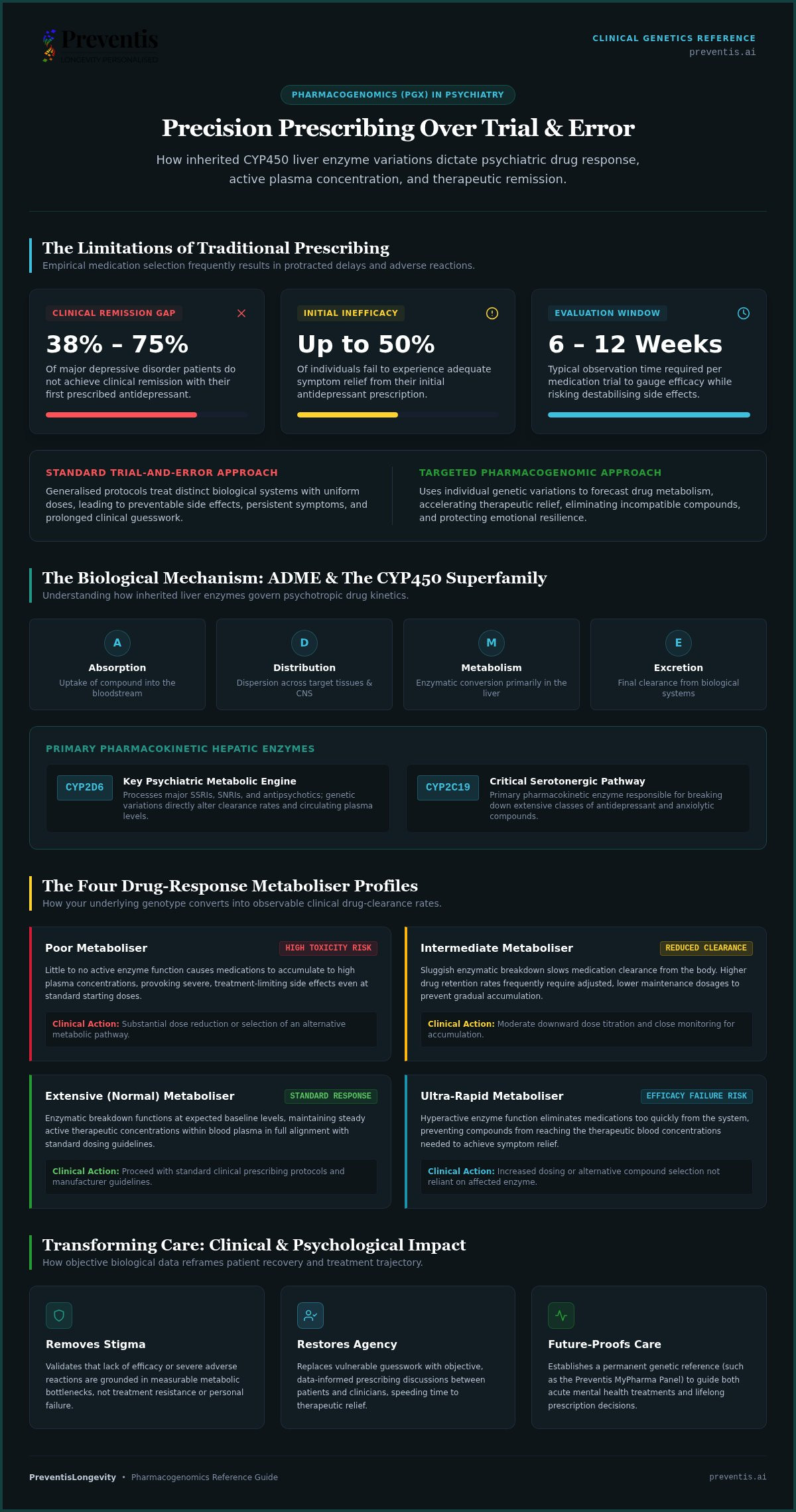
Between 38% and 75% of patients with major depressive disorder do not achieve clinical remission with their first prescribed antidepressant. If you've spent months cycling through different prescriptions while enduring debilitating side effects, it's completely natural to fear that no medication will ever align with your biology. You aren't treatment-resistant; your care has simply lacked individualised data. Utilising pharmacogenomics for mental health drugs transforms this frustrating cycle of trial and error into a targeted, proactive strategy for recovery.
You deserve a clinical approach that honours your unique biochemistry rather than relying on educated guesses. In this 2026 guide, you'll discover how your unique genetic profile dictates your response to mental health medications and learn the step-by-step process to transition from trial-and-error to precision care. We outline the crucial role of pharmacokinetic liver enzymes, review actionable clinical dosing guidelines, and provide a clear roadmap to secure faster therapeutic relief and enduring vitality.
Key Takeaways
- Understand how genetic variations within your CYP450 liver enzymes dictate whether you metabolise psychiatric medications too rapidly or retain high plasma concentrations.
- Discover how integrating pharmacogenomics for mental health drugs eliminates clinical guesswork, sharply reducing side effects and speeding time to therapeutic relief.
- Learn why standard dosages cause adverse reactions in conditions like depression, anxiety, and ADHD, and how metaboliser status informs safer, targeted choices.
- Explore how proactive screening tools like the Preventis MyPharma Panel provide a permanent biological blueprint to optimise your long-term prescription care with foresight and confidence.
Beyond Trial and Error: The Role of Pharmacogenomics in Mental Health
Traditional psychiatric prescribing often feels like an unpredictable gamble. A patient receives a standard prescription, waits six to twelve weeks to gauge efficacy, and frequently contends with destabilising side effects before starting the process over again. Clinical trials show that up to 50% of individuals do not experience adequate symptom relief from their initial antidepressant prescription. This protracted cycle isn't a personal failure; it's the inevitable outcome of treating distinct biological systems with generalised protocols.
The established principles of pharmacogenomics bridge pharmacology and genomics to eliminate this guesswork. By examining how inherited variations govern the absorption, distribution, metabolism, and excretion (ADME) of pharmaceuticals, clinician teams can understand why a standard compound succeeds or fails. Applying pharmacogenomics for mental health drugs shifts care away from reactive crisis management, transforming it into proactive biological foresight that preserves emotional resilience and physical vitality.
Why One Size Does Not Fit All in Psychiatry
Every brain possesses a distinct neurochemical architecture. Variations in receptor targets mean two individuals can experience polar opposite outcomes from the identical milligram dosage of an SSRI or SNRI. While one person achieves emotional clarity, another experiences treatment-limiting tremors or severe nausea. Inherited enzymes directly govern drug clearance rates. Understanding why medications don’t work DNA markers helps explain how your genetic blueprint alters drug exposure, ensuring future therapies fit your exact internal physiology.
The Psychological Impact of Personalised Data
Enduring multiple unsuccessful medication trials takes a profound emotional toll, often breeding helplessness. When patients learn that their challenges stem from identifiable enzymatic bottlenecks rather than an intractable condition, the narrative shifts immediately:
- Removes treatment stigma: Validates that adverse reactions or lack of efficacy are grounded in measurable metabolic differences.
- Restores agency: Transforms vulnerable guesswork into objective, data-informed prescribing discussions with your clinician.
- Future-proofs wellbeing: Establishes a permanent genetic reference that guides acute mental health choices and lifelong medical decisions.
Deploying pharmacogenomics for mental health drugs replaces chronic apprehension with calm confidence. Armed with comprehensive metabolic data, you and your physician can bypass unsuitable therapies entirely, protecting your time and accelerating your trajectory toward sustained wellness.
The Science of PGx: How Your Genes Influence Mental Health Drugs
At the core of psychiatric precision medicine lies the Cytochrome P450 (CYP450) enzyme superfamily, a collection of specialised liver enzymes responsible for processing the vast majority of psychotropic medications. Depending on your genetic sequence, your body produces these enzymes with varying degrees of metabolic activity. In pharmacogenomics, your drug-response phenotype refers to the observable rate at which your body clears or activates a compound based on your underlying genotype. Clinicians evaluate four distinct metaboliser profiles:
- Poor metabolisers: Little to no active enzyme function causes drugs to accumulate to toxic levels, provoking intense side effects even at standard doses.
- Intermediate metabolisers: Sluggish enzyme activity slows medication clearance, frequently requiring lower maintenance doses.
- Extensive (normal) metabolisers: Standard enzymatic breakdown aligns with typical dosing guidelines.
- Ultra-rapid metabolisers: Hyperactive enzyme function eliminates medications too quickly, preventing them from reaching the therapeutic blood concentrations needed to work.
The FDA table of pharmacogenomic biomarkers lists dozens of mental health medications where these specific hepatic phenotypes directly govern safe clinical practice.
Key Genes in Mental Health Pharmacogenomics
Two pharmacokinetic enzymes, CYP2D6 and CYP2C19, handle the heavy lifting for psychiatric pharmacotherapy, processing major selective serotonin reuptake inhibitors (SSRIs), SNRIs, and antipsychotics. Variations here dictate active plasma concentrations. Pharmacodynamic genes, meanwhile, alter cellular target sensitivity. Variations in the COMT gene govern how rapidly dopamine breaks down in the prefrontal cortex, while markers like SLC6A4 and HTR2A modulate serotonin transporter and receptor behavior. Applying pharmacogenomics for mental health drugs provides your doctor with a clear blueprint of how these critical pathways interact.
Predicting Side Effects Before They Happen
Adverse drug reactions aren't random bad luck; they are predictable consequences of an enzymatic mismatch. A poor CYP2C19 metaboliser prescribed standard doses of escitalopram faces an elevated risk of cardiac QT prolongation, while impaired CYP2D6 activity can trigger excessive tremors or serotonin toxicity. Understanding metabolic variants also helps clinicians evaluate vulnerability to antipsychotic-induced weight gain. Securing comprehensive pharmacogenomic testing UK insights removes the peril from medication switches. If you want to protect your nervous system and optimise your ongoing health, partnering with Preventis ensures your treatments align precisely with your biology.
Using Pharmacogenomics to Optimise Your Treatment
Transitioning from speculative prescribing to data-driven precision requires a clear, collaborative framework. Instead of waiting for adverse drug reactions to dictate your healthcare choices, you can proactively acquire clinical-grade genetic insights to guide your medical team. Integrating pharmacogenomics for mental health drugs shifts the prescribing dynamic into a structured partnership between you and your healthcare professional, establishing long-term health optimisation without requiring invasive clinical appointments.
Step 1: Selecting the Right Genomic Panel
Broad ancestry sequencing cannot deliver the pharmacokinetic detail required for precise medication management. Selecting a dedicated DNA test for medication effectiveness ensures that your analysis targets the exact hepatic enzymes responsible for clearing psychotropics. The Preventis MyPharma Panel provides focused clinical coverage across major antidepressant and mood-stabilising classes, evaluating actionable variants without extraneous noise. This tailored testing forms a permanent biological baseline you can draw on whenever medication adjustments arise.
Step 2: Sample Collection and Analysis
Gathering your genetic data is simple, comfortable, and managed entirely from home. The collection workflow follows three methodical phases:
- Non-invasive cheek swab: You collect your biological sample using a straightforward buccal swab, avoiding stressful blood draws or clinic visits.
- Clinical-grade processing: Accredited UK laboratory facilities extract cellular DNA, isolate key metabolic loci, and perform high-resolution variant calling.
- Actionable reporting: Within standard processing windows, your raw genomic sequences are translated into an intuitive, evidence-based medication compatibility report.
Step 3: Implementing Insights with Your Doctor
Translating genetic data into actual relief happens in direct consultation with your treating physician or psychiatrist. Bringing verified cytochrome P450 testing for psychotropic medications directly into your appointment gives your clinician an objective foundation for dosing choices. If the report identifies you as an intermediate or poor metaboliser for a specific enzyme, your doctor can calibrate your starting dose downward or select an alternative compound altogether.
Using the structured personalized drug response test checklist empowers you to discuss specific drug-gene interactions openly. You don't have to endure weeks of debilitating lethargy or sudden cardiac palpitations just to discover a compound isn't suited to your liver enzymes. By applying pharmacogenomics for mental health drugs proactively, you provide your clinician with the foresight needed to refine your treatment quickly, safely, and permanently.
Case Studies: Pharmacogenomics in ADHD, Anxiety, and Depression
Clinical theory delivers its greatest impact when translated into real-world relief. In routine psychiatric practice, patients often present with overlapping symptoms of attention deficit, generalized anxiety, and persistent low mood. Attempting to balance multiple prescriptions simultaneously elevates the risk of competitive enzymatic inhibition, where two drugs vie for the identical hepatic pathway. Applying pharmacogenomics for mental health drugs cuts through this clinical complexity, providing precise answers for patients whose biological realities confound conventional dosing schedules.
Refining ADHD Treatment
Managing ADHD requires navigating distinct pharmacodynamic pathways. Central nervous system stimulants such as methylphenidate rely on carboxylesterase enzymes, whereas amphetamines interact closely with CYP2D6 and dopamine catabolism pathways governed by the catechol-O-methyltransferase (COMT) gene. Consider the stark differences in non-stimulant therapies as well:
- CYP2D6 poor metabolisers: Experience up to a 10-fold increase in systemic drug exposure (AUC) when taking atomoxetine compared to normal metabolisers. Without genetic foresight, standard titration triggers severe nausea, insomnia, and tachycardia within days.
- COMT "Val/Val" variants: Rapidly metabolise prefrontal dopamine, often requiring different stimulant strategies than "Met/Met" individuals who naturally retain higher baseline dopamine concentrations.
Genomic screening allows doctors to tailor paediatric and adult ADHD therapies from day one, sustaining executive focus without erratic afternoon crashes.
Navigating Treatment-Resistant Depression and Anxiety
A frequent clinical scenario involves anxiety patients who report feeling uncomfortably wired, agitated, or jittery on minimal doses of sertraline or citalopram. Enzymatic testing often reveals an impaired CYP2C19 genotype. Because these individuals break down the drug at half the normal rate, a modest starter dose quickly generates disproportionately high serum levels. Conversely, individuals labelled treatment-resistant after failing multiple antidepressant trials often carry ultra-rapid metaboliser alleles. Their livers clear active molecules before therapeutic brain levels can ever establish. They aren't unresponsive to therapy; the therapy simply never had a chance to work.
Precise enzymatic mapping transforms clinical care from prolonged uncertainty into predictable recovery. You can replace months of exhausting titration cycles with targeted clarity. Explore proactive genetic testing with Preventis to discover how targeted testing can accelerate your path toward stable, enduring vitality.
Personalising Your Future: The Preventis MyPharma Advantage
Traditional healthcare systems consistently isolate psychiatric care from physical longevity, intervening only after severe distress or adverse drug events occur. PreventisLongevity reframes this fragmented approach by treating mental equilibrium and systemic resilience as deeply connected disciplines. Cognitive vitality directly influences metabolic function, cardiovascular health, and cellular ageing. Integrating pharmacogenomics for mental health drugs helps you transition from an uncertain patient into an informed, optimised individual who proactively commands their biological trajectory.
The MyPharma Panel Experience
The Preventis MyPharma Panel is engineered for those who value rigorous foresight and total health stewardship. While precision psychiatric guidance remains a central priority, the panel's clinical scope extends well beyond antidepressants and mood stabilisers. It delivers comprehensive gene-drug profiling across essential therapeutic categories, including cardiology, pain management, and metabolic support. Complex genomic sequencing is distilled into an intuitive, tiered decision framework that provides clear guidance for your prescribing physician. For individuals demanding complete biological visibility, combining targeted pharmacogenetics with whole genome sequencing for prevention creates an enduring foundation for lifelong health optimisation.
Securing Your Biological Future
Your inherited metabolic code remains constant throughout your life. Unlike dynamic blood biomarkers that require regular reassessment, your pharmacogenomic data serves as a permanent clinical asset. Having your genetic profile on file gives your healthcare team immediate foresight, ensuring future prescriptions are tailored to your metabolism right from the start:
- Future-proofed care: Safely informs prescribing decisions as new clinical compounds and medical needs emerge over the coming decades.
- Cross-disciplinary protection: Guards against adverse drug-gene interactions across psychiatric, cardiovascular, and pain therapies simultaneously.
- Total self-agency: Equips you with direct-to-consumer convenience and clear data to advocate for your own care with any physician.
Protecting your mental clarity and long-term health requires decisive, personalised action. By implementing pharmacogenomics for mental health drugs, you remove biological guesswork from your care and secure your path to sustained vitality. Discover the MyPharma Panel and take control of your mental health roadmap today.
Empowering Your Journey to Precision Prescribing
Your mental health journey doesn't have to be defined by guesswork, delayed therapeutic relief, or distressing side effects. Inherited pharmacokinetic differences in your liver enzymes explain why past medications failed or caused intense reactions. Understanding these metabolic realities transforms vulnerable uncertainty into proactive biological foresight. Armed with this knowledge, you and your doctor can collaborate to make confident, targeted prescribing decisions right from the start.
Adopting pharmacogenomics for mental health drugs grants you complete agency over your healthcare roadmap. With clinical-grade genomic analysis and seamless direct-to-consumer convenience, acquiring these vital medical insights is simpler and more accessible than ever. Expert-led longevity insights ensure that your genetic profile safeguards not only your emotional stability today, but your broader physical health for decades to come.
You have the power to replace trial-and-error medicine with clarity, safety, and long-term vitality. Optimise your mental health treatment with the Preventis MyPharma Panel, and take the first decisive step toward aligning your ongoing care with your biological blueprint.
Frequently Asked Questions
How much does pharmacogenomics for mental health drugs cost in the UK?
Private pharmacogenomic testing in the UK generally ranges from several hundred pounds for targeted panels to broader figures for multi-panel preventive health screens. Costs vary depending on whether the laboratory analyzes specific pharmacokinetic markers or integrates full metabolic profiling. Because this testing represents a one-time genetic analysis that remains biologically valid for life, many individuals view it as a permanent investment in medication safety rather than a recurring healthcare expense.
Is pharmacogenomics testing for antidepressants available on the NHS?
Routine pharmacogenomic screening before initiating psychiatric prescriptions is not yet standard practice across general NHS primary care. While pilot implementation trials have evaluated the economic and clinical utility of testing, widespread commissioning remains limited. Consequently, individuals seeking immediate answers to resolve failed trials or intolerable side effects turn to private, direct-to-consumer services to secure actionable genetic insights without facing long waiting lists.
Can a DNA test tell me which ADHD medication is best for me?
A DNA test cannot pinpoint an absolute "perfect" cure, but it highlights exactly how your liver enzymes and brain receptors interact with specific compounds. For non-stimulants like atomoxetine, knowing your CYP2D6 metaboliser status prevents severe drug accumulation and adverse reactions. For stimulants, analyzing enzymes and dopaminergic genes helps clinicians determine whether methylphenidate or amphetamine-based therapies offer a smoother therapeutic window without extreme crashes.
How accurate is pharmacogenomic testing for psychiatric drugs?
Clinical-grade testing performed by accredited laboratories provides extremely high analytical accuracy, exceeding 99% reproducibility for identified genetic variants. The clinical recommendations derived from these results follow strict, peer-reviewed dosing standards established by international consortiums like CPIC. While genetics represents a critical pillar of drug response, your physician will also evaluate non-genetic factors, such as organ function, diet, and lifestyle, when finalizing your treatment plan.
Will my genetic data be shared with insurance companies?
Reputable private genomic providers adhere to stringent UK data protection laws, including GDPR, maintaining complete patient confidentiality. Your raw sequencing data and personalized reports remain your private medical property. They are never sold to commercial marketing firms, nor are they released to insurance underwriters without your explicit written instruction. You maintain full autonomy over who reviews your results.
Do I need a doctor’s referral to get a MyPharma test?
You do not need a GP or psychiatrist referral to order the Preventis MyPharma Panel. The testing kit arrives directly at your home with simple, non-invasive collection materials for a self-administered cheek swab. Once your analysis is complete, you receive an intuitive, traffic-light clinical report designed specifically to share with your treating physician to guide any future dosage adjustments.
Can pharmacogenomics help with bipolar disorder medications?
Genomic profiling plays a vital role in optimizing mood stabilizers, atypical antipsychotics, and adjunctive therapies commonly prescribed for bipolar disorder. By assessing enzymes like CYP2D6, CYP3A4, and CYP2C19, testing clarifies how rapidly your system clears complex psychotropic compounds. This proactive metabolic insight helps clinicians avoid triggering severe neurological side effects, dangerous drug interactions, or unnecessary therapeutic delays.
What happens if the test shows I am an ultra-rapid metaboliser?
Discovering you are an ultra-rapid metaboliser reveals that your liver clears certain psychiatric compounds so quickly that standard doses fail to achieve therapeutic blood levels. If you are using pharmacogenomics for mental health drugs, this finding explains why previous treatments felt completely ineffective. Your doctor can use this data to safely increase your dosage or transition you to an alternative medication broken down via an entirely different pathway.


